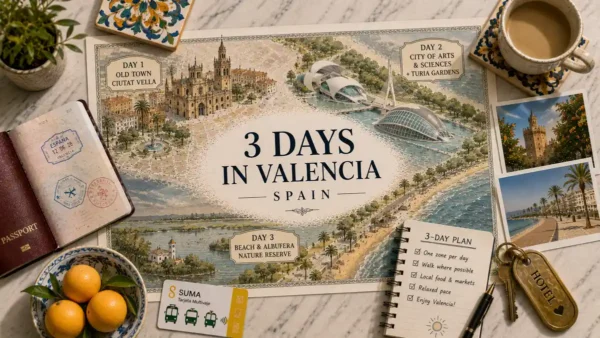
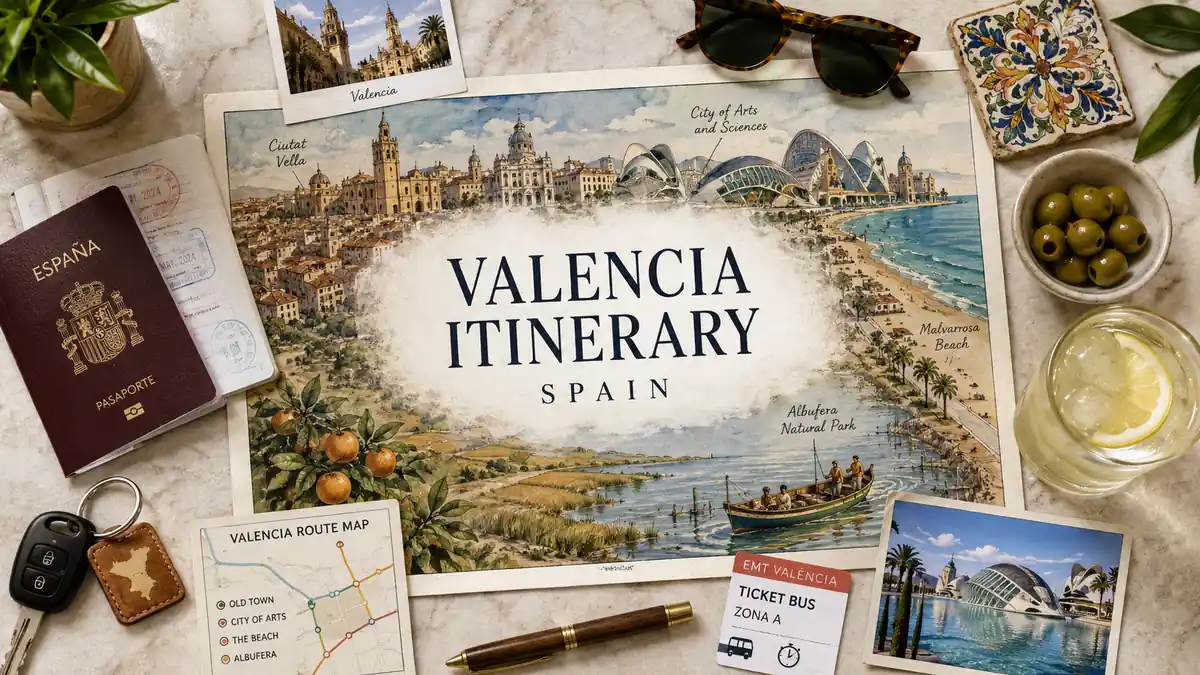
Two days is enough to see Valencia’s headline sights — if you group them by neighborhood and let the old town carry you on foot. The mistake most first-timers make is treating the city as a checklist and zig-zagging between the Cathedral, the City of Arts, and the beach. Done in the right order, those same sights connect into a clean, low-stress route with barely any transit. This itinerary sets that order: spend Day 1 inside the compact old town, then use Day 2 for the modern City of Arts, the beach, and an Albufera sunset. You walk almost everything, eat paella where it belongs, and finish each evening without rushing. Below you’ll find the day-by-day sequence, why the order works, where meals fit, and how little you actually need to move.
Quick Answer
Spend Day 1 in Valencia’s old town (Ciutat Vella) and Day 2 in the City of Arts plus the beach. Group sights by neighborhood — the old town is fully walkable, and one bus links Day 2’s beach and Albufera. This relaxed, geographically logical pace suits first-timers over a packed checklist.
Trust Layer
Tripstou itinerary guide for travelers planning a route. Covers pacing, stop count, stop order, base logic, and trip length.
Produced with AI assistance and reviewed by Alex Perrut, working in tourism since 2015, for the Tripstou editorial team. See our editorial process for details.
Last factual review: June 8, 2026.
Official sources consulted: European Union, Travel Europe.
Key Takeaways
- Spend Day 1 entirely in the walkable old town and Day 2 on the City of Arts, beach, and Albufera corridor.
- Group sights by neighborhood instead of crisscrossing, so you minimize backtracking and barely need transit across both days.
- Day 1 needs no transport at all, and a single bus links Day 2’s beach and Albufera.
- Eat paella at lunch by the water and save slow tapas crawls for El Carmen after dark.
- Close Day 2 with an Albufera sunset, the lagoon where paella originated, for the route’s natural finale.
- Stick to two days for the headline sights; add a third only for day trips or slower mornings.
Table of Contents
Why This Two-Day Valencia Route Works
This route works because it groups Valencia’s sights by neighborhood to minimize backtracking. Day 1 covers the compact old town on foot, while Day 2 strings together the City of Arts, the beach, and Albufera along one corridor. You see the headline sights without crossing the city twice.
The logic is simple: cluster, don’t crisscross. Valencia’s must-see sights fall into two natural zones — the medieval core and the modern southeast corridor — and the route treats each as a single day. That keeps your walking purposeful and your transit minimal.
Day 1 stays entirely within the old town, where the Cathedral, market, and silk exchange sit minutes apart. Day 2 follows the former river south through the Turia Gardens, picking up the City of Arts, then the beach, then Albufera in one continuous line.
This relaxed pace suits first-timers more than a maximized checklist. If you’d rather slow down further, our practical Valencia tips cover how to avoid over-packing your days. For wider context on the city beyond this route, the full Valencia travel guide is the place to start.
| Element | Day 1 | Day 2 |
|---|---|---|
| Focus area | Old town (Ciutat Vella) | City of Arts, beach, Albufera |
| Headline stops | Cathedral, La Lonja, Mercado Central | Turia Gardens, Oceanogràfic, Malvarrosa |
| Getting around | Entirely on foot | Mostly walking plus one bus |
| Best meal | Tapas in El Carmen at night | Paella by the water at lunch |
| How it ends | Evening in Barrio del Carmen | Albufera sunset just outside the city |
Day 1: Valencia’s Old Town (Ciutat Vella)
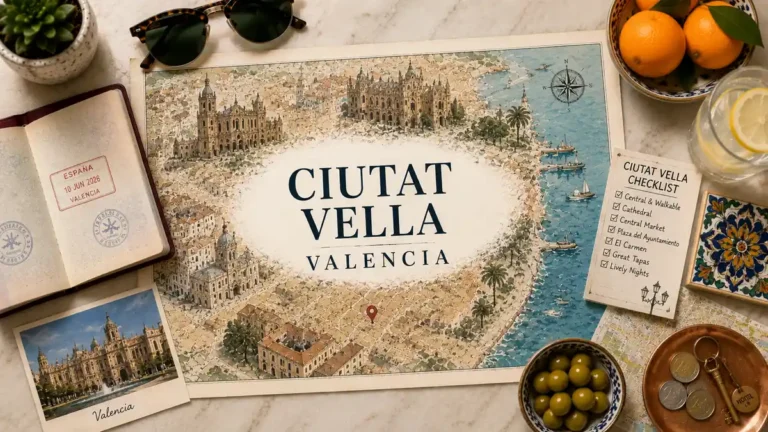
Start Day 1 at the Cathedral and walk a tight old-town loop. Valencia’s Ciutat Vella packs its landmarks within a few minutes of each other, so the day flows on foot from the Cathedral and Plaza de la Reina to La Lonja, the Mercado Central, and Barrio del Carmen by night.
Walk it as a loop so you never double back. The order that flows best:
- Valencia Cathedral and the Miguelete tower
- Plaza de la Reina, then La Lonja de la Seda
- Mercado Central for lunch
- Barrio del Carmen after dark for tapas
Cathedral and the Miguelete climb
Begin at Valencia Cathedral when it opens and climb the Miguelete tower early, before the queues and midday heat build. The bell tower gives you the city’s best orientation view. Arrive early rather than mid-afternoon — climbing slots fill quickly and the staircase is narrow.
Plaza de la Reina and La Lonja
From the Cathedral, step into Plaza de la Reina and walk on to La Lonja de la Seda, the Gothic silk exchange and a UNESCO site. The two sit a few minutes apart. La Lonja rewards a short visit; book ahead in peak season to skip the line.
Mercado Central
Time the Mercado Central for late morning or lunch. The Modernista market hall sits opposite La Lonja and is the natural place to eat — fresh produce, jamón, and a quick bite among the stalls. It winds down by mid-afternoon, so don’t save it for the evening.
Barrio del Carmen and evening tapas
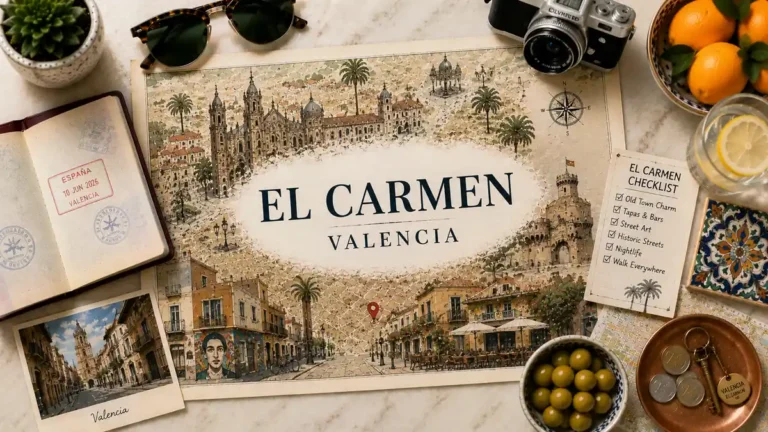
End Day 1 in Barrio del Carmen, the old town’s tangle of medieval streets. By night it’s the city’s best area for a slow tapas crawl, covered in the next section. By day, its plazas and street art make an easy, unhurried wander back toward your base.
Day 2: Turia Gardens, City of Arts, and the Beach
Walk the Turia riverbed to the City of Arts, then finish at the beach. Day 2 follows the old riverbed gardens south to the City of Arts and Sciences, continues to Malvarrosa or El Cabanyal for the afternoon, and can close with an Albufera sunset just outside the city.
The Turia Gardens walk
Start Day 2 in the Turia Gardens, the green riverbed that loops around the old town. Walking its southern stretch is the most pleasant way to reach the City of Arts, passing under historic bridges along the way. Rent a bike if you’d rather move faster.
City of Arts and Oceanogràfic
The City of Arts and Sciences anchors Day 2 — its futuristic complex includes the Oceanogràfic, Europe’s largest aquarium. Pick one or two buildings rather than all of them; the Oceanogràfic alone takes a few hours. Book ahead online, as same-day tickets sell out and queues run long. For a sense of what the ticketed attractions add up to, see what Valencia costs.
Malvarrosa and El Cabanyal beach
From the City of Arts, head to Malvarrosa or the neighbouring El Cabanyal for the afternoon. The wide sandy beach and seafront promenade are a short ride away and lined with restaurants — the right place for a midday paella by the water.
Optional: Albufera sunset
Close the day with an optional trip to Albufera Natural Park, the freshwater lagoon just south of the city and the birthplace of paella. A sunset boat ride across the still water is the route’s natural finale. Skip it only if you’re short on time or energy.
Tours and activities
Book skip-the-line tickets, day trips and local tours with free cancellation on most activities.
You can also browse everything on getyourguide.com.
Tripstou may earn a commission if you book through this link, at no extra cost to you.
Where to Eat Paella and Tapas Along the Route
Eat paella at lunch near the water and save tapas for El Carmen at night. Paella is a midday dish in Valencia, best enjoyed by the beach or in Albufera where it originated. Evenings suit slow tapas crawls through the bars of Barrio del Carmen.
Meal timing matters more than picking a single restaurant. Two rules carry the whole trip:
- Paella at lunch, by the water. Valencians eat it midday, and the best settings are the beach restaurants or the rice houses out at Albufera.
- Tapas at night, in El Carmen. The old town’s bars come alive after dark for grazing across small plates.
This rhythm also fits the route: Day 2 puts you beachside at lunch, and both evenings land you back in the old town for tapas. If you’re heading out late, a quick read on staying safe in Valencia covers the nightlife areas. Skip the rigid restaurant list — follow the timing and you’ll eat well.
Getting Around Valencia in Two Days
You can walk most of this route; one bus covers the beach and Albufera. Day 1 in the old town needs no transit at all, and Day 2 links the City of Arts, the beach, and Albufera with short, simple hops rather than a full transport plan.
The route is built to keep you on foot. Day 1’s old-town loop needs zero transport — everything is walkable. Day 2 covers a little more ground: the Turia Gardens walk to the City of Arts is on foot, and from there a single bus reaches both the beach and Albufera.
That’s the whole transit picture for this itinerary. You won’t need a rental car or a complicated ticket plan for two days. For bus lines, passes, and airport connections, our getting around Valencia guide has the specifics — keep this page for the route, that one for the mechanics.
Where to Base Yourself for This Itinerary
Base near the old town so Day 1 begins on foot. Staying in or beside Ciutat Vella puts you within walking distance of every Day 1 stop and a short hop from Day 2’s corridor. Ruzafa is a strong second choice for food and a livelier evening scene.
Location is the one lodging decision that affects this route. Sleeping in or next to the old town means Day 1 starts the moment you step outside, and Day 2’s gardens are an easy walk away. It also puts the evening tapas scene on your doorstep.
Ruzafa, just south, is the strong alternative — slightly removed from the sights but excellent for food and nightlife. Beyond that, area choice comes down to budget and travel style. For a full breakdown of neighbourhoods and hotels, see where to stay in Valencia.
Hotels and places to stay
Compare hotels, apartments and stays for your dates in one search.
Search hotels and stays on hotels.com →
Tripstou may earn a commission if you book through this link, at no extra cost to you.
Should You Add a Third Day in Valencia?
Two days covers Valencia’s headline sights; add a third only for day trips or a slower pace. The two-day route already fits the old town, the City of Arts, the beach, and Albufera. A third day earns its place when you want excursions or unhurried mornings rather than more landmarks.
Stick to two days if your goal is the headline sights at a comfortable pace — this route delivers all of them. You’ll see the old town, the City of Arts, the beach, and Albufera without rushing or backtracking.
Add a third day in two cases: you want day trips beyond the city, or you simply prefer slower mornings and more time in each place. A third day buys breathing room and excursions, not essential sights. If that’s you, our 3 days in Valencia itinerary picks up exactly where this one ends.
Frequently Asked Questions
Is two days enough to see Valencia?
Yes, two days comfortably covers Valencia’s headline sights. Day 1 fits the walkable old town, and Day 2 covers the City of Arts, the beach, and an Albufera sunset. A third day only adds day trips or a slower pace, not essential landmarks for a first visit.
Is Valencia walkable in two days?
Valencia is highly walkable, especially the old town where Day 1’s sights sit minutes apart. You can cover the entire first day on foot without any transport. Day 2 also walks the Turia Gardens to the City of Arts, needing only one bus to reach the beach and Albufera.
Can you visit the City of Arts and the beach on the same day?
Yes, both fit comfortably into Day 2. After walking the Turia Gardens to the City of Arts and Sciences, the beach at Malvarrosa or El Cabanyal is a short ride away. Pick one or two City of Arts buildings rather than all of them to keep the afternoon free for the coast.
When is the best time to eat paella in Valencia?
Paella is a lunchtime dish in Valencia, traditionally eaten midday rather than at dinner. The best settings are the beach restaurants or the rice houses out at Albufera, where the dish originated. Save your evenings for a slow tapas crawl through the bars of Barrio del Carmen instead.
Is the Albufera trip worth it on a short visit?
Albufera is worth it if you have the time and energy on Day 2. The freshwater lagoon just south of the city is the birthplace of paella, and a sunset boat ride makes a natural finale to the route. Skip it only when you are short on time.
Do you need a car for a two-day Valencia itinerary?
No, you do not need a car for this route. Day 1 in the old town is entirely walkable, and Day 2 combines walking with a single bus to reach the beach and Albufera. A rental car adds cost and parking hassle without saving meaningful time over two days.
Related Guides
- Valencia travel guide — the full city hub for context beyond this route.
- Where to stay in Valencia — neighbourhoods and hotels for every travel style.
- 3 days in Valencia — extend the trip with day trips and a slower pace.
- Getting around Valencia — buses, passes, and airport connections.
- Valencia trip cost — what to budget for tickets, food, and stays.
- Valencia travel tips — practical advice for a first visit.
- Is Valencia safe? — safety for nightlife, beaches, and busy areas.
Did this guide save you time or money? Tripstou is independent and reader-funded — if you'd like to give something back, you can support the site with a crypto contribution of any size.