Can you get Italy’s Digital Nomad Visa, and how do you actually apply? This guide answers both, from eligibility to arrival. Italy’s Digital Nomad Visa is the country’s national long-stay route for non-EU remote workers — a residence track, not a short-stay tourist visa or ETIAS authorization (that distinction gets one clarifying line later, then a link). If you are a salaried remote employee or a freelancer earning abroad, this is the visa built for you.
You will find the full walkthrough here: who qualifies, how much income you need, the health insurance requirement, the step-by-step application, how long it takes, and what happens with family and renewal. This page assumes you have already decided Italy is a candidate — the bigger “is Italy right for me?” question lives in the hub guide. Here the focus stays narrow and practical: getting you from eligibility to a permesso di soggiorno.
Quick Answer
Yes — Italy’s Digital Nomad Visa lets non-EU remote workers and freelancers live and work in Italy long-term. Eligibility hinges on proving remote work, income above a set threshold, qualifying health insurance, and a degree or equivalent experience. You apply at your home-country Italian consulate, then convert to a permesso di soggiorno after arrival.
Trust Layer
Tripstou planning guide for travelers resolving one travel decision. Covers the main variable, traveler context, and practical tradeoffs.
Produced with AI assistance and reviewed by Alex Perrut, working in tourism since 2015, for the Tripstou editorial team. See our editorial process for details.
Last factual review: July 11, 2026.
Official sources consulted: italia.it, enit.it.
Key Takeaways
- You qualify only as a non-EU remote worker meeting an income threshold, holding qualifying health insurance, and showing a degree or equivalent experience.
- You apply at your home-country Italian consulate first, then convert the entry visa into a permesso di soggiorno soon after arriving.
- Treat the reported income figure, fees, insurance minimums, and processing times as ranges — confirm the current numbers with the consulate handling your case.
- Basic travel insurance rarely qualifies; you need private coverage spanning the full visa period with hospitalization, emergency care, and repatriation in scope.
- Processing runs a wide 30-to-120-day range by consulate, so start months ahead and avoid booking flights until the visa is issued.
- Family reunification, renewal, and a path toward long-term residence are all possible — the FAQ below covers how each works.
Table of Contents
What is the Italy Digital Nomad Visa?
The Italy Digital Nomad Visa is a national long-stay (Type D) visa for non-EU remote workers. A dedicated inter-ministerial decree created it, giving highly skilled employees and freelancers a legal route to live in Italy while working for clients or employers based abroad. It is a residence visa, not a short-stay one.
The visa exists for a specific type of person: a non-EU national whose income comes from remote work, not from the Italian job market. That framing matters. It lets remote earners settle in Italy without competing for local jobs and without needing an Italian employer to sponsor them.
Do not confuse it with a short-stay Schengen visa or ETIAS travel authorization. Those cover tourism and trips under 90 days; the Digital Nomad Visa is a long-stay residence route with its own eligibility and paperwork. We resolve that distinction directly in the FAQ below.
If you are still weighing whether the country suits your remote setup at all, that broader decision sits one level up in our guide to living in Italy as a digital nomad. This page assumes you have chosen Italy and focuses only on the visa itself.
Who qualifies for the Italy Digital Nomad Visa?
You qualify for the Italy Digital Nomad Visa if you meet five gates at once. You must be a non-EU/EEA citizen, work remotely, earn above an income threshold, hold qualifying health insurance, and show a degree or equivalent professional experience. Both employees and freelancers can meet the definition.
The eligibility gate breaks down into five documented criteria:
- Non-EU/EEA citizenship — EU and EEA nationals already have free movement and do not need this visa.
- Genuine remote work — a job or self-employment you can perform from Italy for clients or an employer abroad.
- Income above the threshold — an annual minimum you must document with proof of earnings.
- Qualifying health insurance — private coverage that spans your full stay.
- A degree or equivalent experience — a higher qualification or several years in your field.
The word to watch across all five is “highly skilled.” The visa is not a general residence permit for anyone earning abroad — it is aimed at qualified professionals, and each criterion is a filter the consulate checks against your file.
Can employees apply, or only freelancers?
Both can apply. The visa covers salaried employees working remotely for a non-Italian company and self-employed freelancers or contractors serving clients abroad. The route you take changes the paperwork, not the eligibility.
For employees, a remote-work contract usually proves income and the nature of the work in one document. Freelancers carry a heavier evidence burden: client contracts, invoices, and proof the work continues once you relocate. That difference in documentation is often the deciding factor in which application moves faster — the employee path tends to have fewer moving parts.
Do you need a degree or professional experience?
You need one or the other, not necessarily both. Applicants generally show either a higher-education qualification or several years of proven experience in their field. The exact number of years and the accepted qualifications are set by the governing decree and interpreted at consulate level, so confirm the threshold with the consulate handling your case before you assemble documents.
How much income do you need for the Italy Digital Nomad Visa?
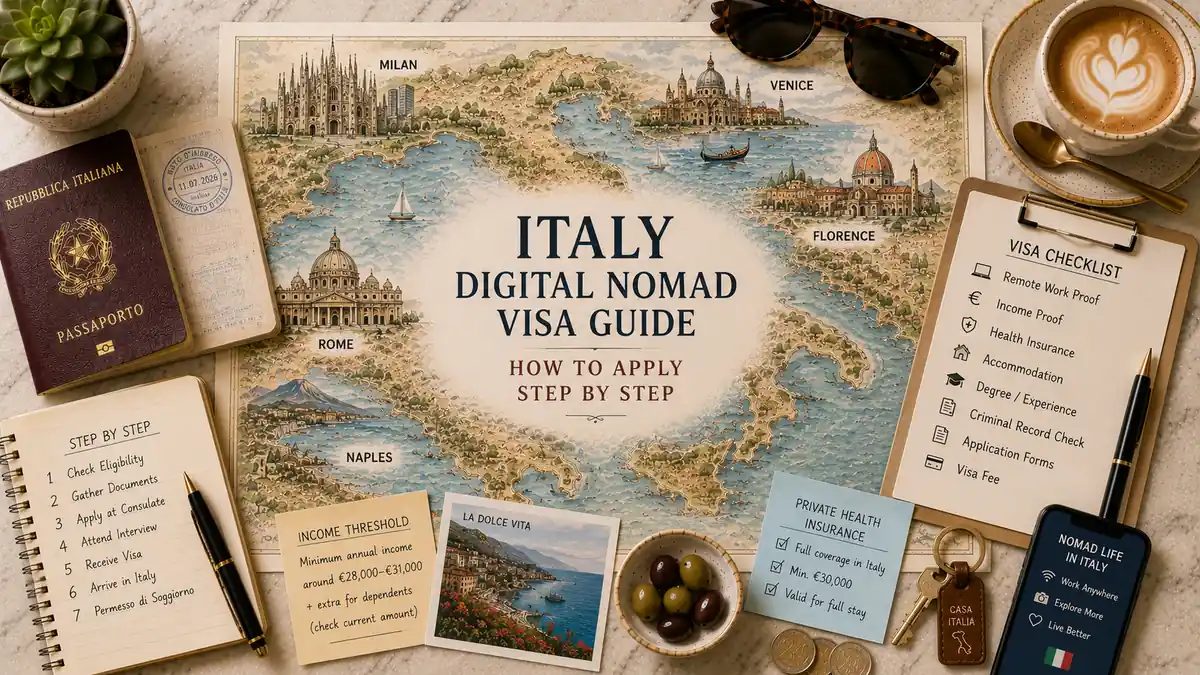
You need to show roughly €28,000 in annual income, though the exact figure varies by consulate. It is set by decree but read differently across consulates, and it rises when you bring dependents. Treat any number you see as an approximate floor and confirm the current figure with the consulate handling your application.
How the threshold works in practice matters more than the headline number. It is a minimum you must document — through contracts, pay slips, or tax returns — not a target salary. Bringing a spouse or children raises the amount you must prove, with an additional sum expected per dependent, so budget your evidence around your whole household, not just yourself.
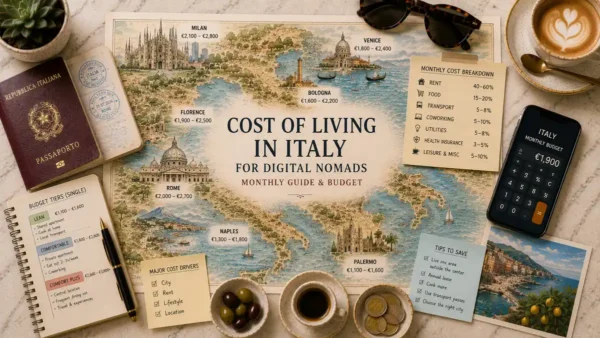
The threshold answers “can I qualify,” not “can I live on this.” Whether that income stretches far enough for a comfortable life depends heavily on your city, and it is a separate question we cover in our guide to cost of living for nomads in Italy.
What health insurance do you need for the Italy Digital Nomad Visa?
You need private health insurance that covers your entire stay in Italy, and basic travel insurance usually will not qualify. Consulates look for a policy covering medical treatment, hospitalization, and emergencies for the full visa period. A short trip-cancellation or travel-medical plan is built for tourists, not residents.
The requirement is about duration and scope, not price. A travel policy is designed for a holiday of days or weeks; the visa needs coverage that runs the length of your permit and handles the routine and unexpected care a full year of living involves. Consulates commonly check the policy’s coverage dates against your intended stay — a plan that expires mid-visa is a frequent rejection reason.
Aim for a policy that names hospitalization, emergency treatment, and repatriation within its scope, with a coverage floor the consulate specifies. Because minimum coverage amounts and accepted providers vary, confirm the exact requirement with your consulate rather than assuming your existing travel cover is enough.
Travel medical insurance
SafetyWing Nomad Insurance provides travel medical coverage designed for travelers and digital nomads, with flexible Monthly and Annual plans.
Check Nomad Insurance coverage and current pricing →
New Nomad Insurance Essential members can get 8 weeks of electronic theft coverage free with reward code TRIPSTOU8.
Apply the reward before creating your SafetyWing account by looking for the pink camera icon on the Nomad Insurance page.
Tripstou may earn a commission if you purchase through this link, at no extra cost to you.
How to apply for the Italy Digital Nomad Visa, step by step
You apply in your home country first, then finish the process after you land in Italy. The sequence is fixed: gather documents, book a consulate appointment, submit the application, enter Italy, and convert the visa into a permesso di soggiorno. The visa gets you in; the permesso legalizes the stay.
The application runs as an ordered sequence, and each step depends on the one before it:
- Assemble your documents — passport, proof of remote work, income evidence, insurance, and your degree or experience record. Some may need translation or legalization.
- Book your consulate appointment — at the Italian consulate or embassy covering your home region. Slots are the common bottleneck.
- Submit the application — attend in person, hand over your file, and pay the consular fee.
- Enter Italy — once the Type D visa is issued, travel to Italy within its validity window.
- Convert to a permesso di soggiorno — apply for the residence permit shortly after arrival.
Book the consulate appointment early — do not wait until your documents are fully translated and legalized. In busy consulates the appointment slot, not the paperwork, is the real constraint, and dates can sit weeks out. Securing the slot first lets you finish document prep against a known deadline.
After arrival: converting to a permesso di soggiorno
The permesso di soggiorno is the residence permit that replaces your entry visa once you are inside Italy. You must apply for it within a short deadline after arriving — commonly cited as around eight days — but confirm the exact window locally, because missing it can jeopardize your legal status. The visa authorizes entry; the permesso is what lets you legally stay, work, and later renew.
How long does the Italy Digital Nomad Visa take to process?
Processing typically takes 30 to 120 days, depending heavily on which consulate handles your file. There is no uniform national timeline — some consulates clear applications in a few weeks, others take several months. Because the range is wide, start the process well before you plan to move.
The variation comes down to consulate workload, document completeness, and local demand, not the visa type itself. A complete, well-organized file moves faster than one that triggers follow-up requests. Build a buffer into your plans: apply months ahead, and avoid booking flights or ending a lease until the visa is in hand. Timeframes shift with demand and any implementing-decree updates, so treat the range as guidance and verify current waits with your consulate.
Frequently Asked Questions
Can you bring your family on the Italy Digital Nomad Visa?
Yes, the visa allows family reunification for a spouse and dependent children. You must prove additional income for each dependent above your own threshold, plus health coverage and accommodation for them. The exact per-person amount is consulate-set, so confirm the current figures and required documents with the consulate handling your application.
How do you renew the Italy Digital Nomad Visa?
You renew the permesso di soggiorno before it expires, not the entry visa itself. Renewal requires showing you still meet the original conditions — continuing remote work, income above the threshold, valid health insurance, and Italian residency. Validity and renewal periods vary, so check the current terms and lead time at your local questura.
Can the Italy Digital Nomad Visa lead to permanent residence or citizenship?
Yes, continuous legal residence under the visa can count toward long-term residence and eventually citizenship. Italy generally requires several years of uninterrupted, lawful residency before you qualify, with language and integration conditions attached. Because the thresholds and timelines shift, treat this as a long-game possibility and confirm the current rules before relying on them.
How is the Italy Digital Nomad Visa different from a Schengen short-stay visa or ETIAS?
The Digital Nomad Visa is a national long-stay residence route; a Schengen short-stay visa and ETIAS only cover trips under 90 days. ETIAS is a travel authorization for tourism, not a right to live or work in Italy. For those short-stay and ETIAS rules, see Italy’s short-stay visa and ETIAS rules.
Does the Italy Digital Nomad Visa create tax obligations in Italy?
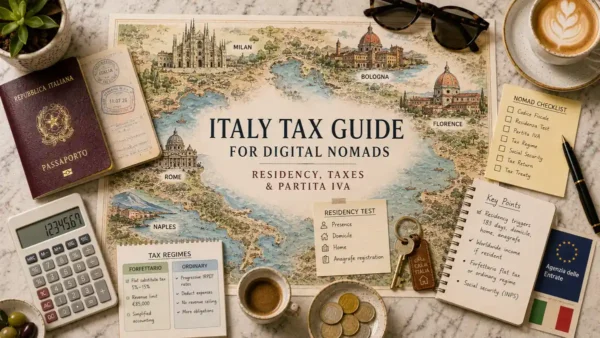
Yes, it can. Once you live in Italy long enough to become tax resident, your worldwide income may fall under Italian taxation, even though you work for clients abroad. The visa itself does not set your tax rate. For how the rules actually work, see how digital nomads are taxed in Italy.
Do EU citizens need the Italy Digital Nomad Visa?
No. EU and EEA citizens already have free-movement rights, so they do not apply for this visa. Instead, they can move to Italy and simply register their residency with the local authorities once a stay passes 90 days. The Digital Nomad Visa exists specifically for non-EU nationals who lack that automatic right.
Related Guides
Once the visa is settled, these guides resolve the decisions that come next — the broader nomad decision, taxes, living costs, and the short-stay track:
- Living in Italy as a digital nomad — the hub decision: is Italy the right base for your remote work?
- How digital nomads are taxed in Italy — the tax obligations the visa can create once you become resident.
- Cost of living for nomads in Italy — whether your income stretches comfortably, city by city.
- Italy’s short-stay visa and ETIAS rules — the separate track for tourism and trips under 90 days.
- Best cities in Italy for digital nomads — where to land once the visa is approved, city by city.
- Italy travel guide — the wider country overview, for the travelling you do around the work.
Did this guide save you time or money? Tripstou is independent and reader-funded — if you'd like to give something back, you can support the site with a crypto contribution of any size.