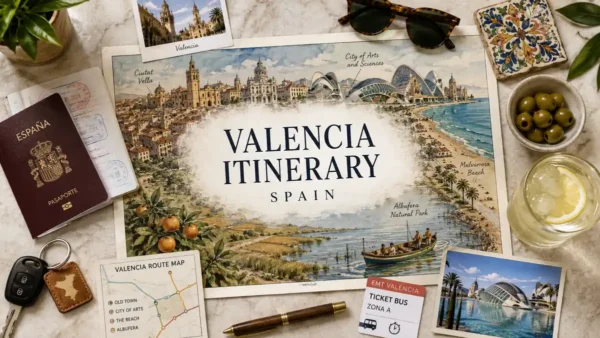
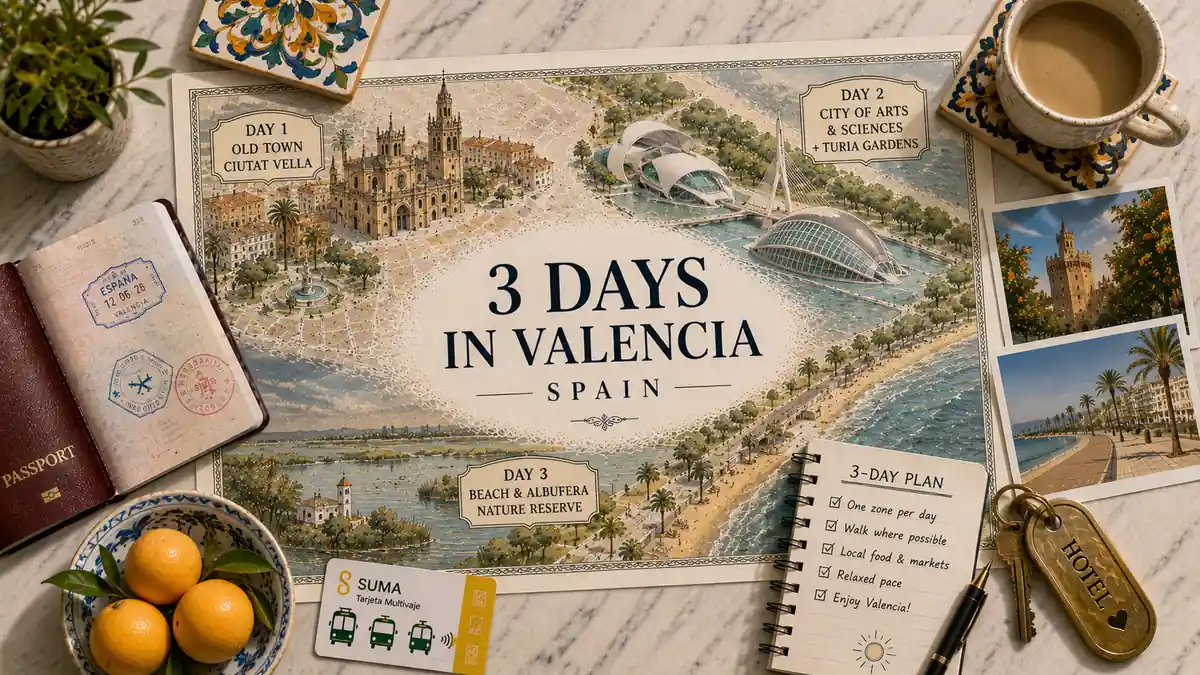
Three days is enough to see Valencia well — if you plan the route by zone instead of chasing scattered sights. The city’s highlights fall into three natural clusters, and the trick is to take them one cluster per day so you never waste time crossing town. This guide lays out a walkable, day-by-day plan: the old town first, the City of Arts and Sciences with Turia Gardens next, and the coast — Malvarrosa beach and Albufera — on the final day. Each day stays tight and logical, with the heaviest walking in the historic centre and a relaxed, flexible close by the sea. You will also find the one real decision the route asks of you, beach versus Albufera, plus broad guidance on where to base yourself. The day-by-day structure below sequences every stop in order.
Quick Answer
Spend three days in Valencia by zone — old town, City of Arts and Sciences, then the coast. Cluster sights by area and walk where possible so you never backtrack: the old town is fully walkable and the science complex sits beside Turia Gardens. It suits first-time visitors wanting the highlights at a relaxed pace.
Trust Layer
Tripstou itinerary guide for travelers planning a route. Covers pacing, stop count, stop order, base logic, and trip length.
Produced with AI assistance and reviewed by Alex Perrut, working in tourism since 2015, for the Tripstou editorial team. See our editorial process for details.
Last factual review: June 8, 2026.
Official sources consulted: Your Europe travel guidance and the European Union portal.
Key Takeaways
- Plan the trip by zone, not by sight, tackling one walkable cluster each day to avoid backtracking across the city.
- Day 1 covers the old town on foot; Day 2 pairs the City of Arts with adjacent Turia Gardens.
- Day 3 is the flexible coast day, and its one real decision is Malvarrosa beach versus Albufera Nature Reserve.
- Choose the beach for easy downtime; choose Albufera for paella’s birthplace, lagoon boat trips, and a memorable sunset.
- Base yourself centrally to keep Days 1 and 2 on foot, leaving transport for the coast on Day 3.
- The route suits first-time visitors wanting the highlights at a relaxed pace, with deeper transport and stay decisions linked out.
Table of Contents
What does the perfect 3-day Valencia route look like?
The best three-day Valencia route runs by zone: old town, then City of Arts, then coast. This order works because each day stays inside one walkable cluster, so you spend your time seeing Valencia rather than crossing it. Day 1 covers the historic centre, Day 2 the modern science complex beside Turia Gardens, and Day 3 the coast.
The logic is anti-backtracking. Valencia’s three signature experiences sit in three separate pockets, and bouncing between them wastes a surprising amount of a short trip. By dedicating each day to one zone, you keep transitions to a minimum and let the pace ease as the trip goes on — dense walking in the old town, a relaxed riverbed stroll on Day 2, and an open, flexible coast day to finish.
This shape suits first-time visitors who want the headline sights without a rushed checklist. The main tradeoff is depth: three days resolves the route, not every museum or backstreet. For the wider city context — neighbourhoods, food, and everything beyond this route — see the full Valencia travel guide.
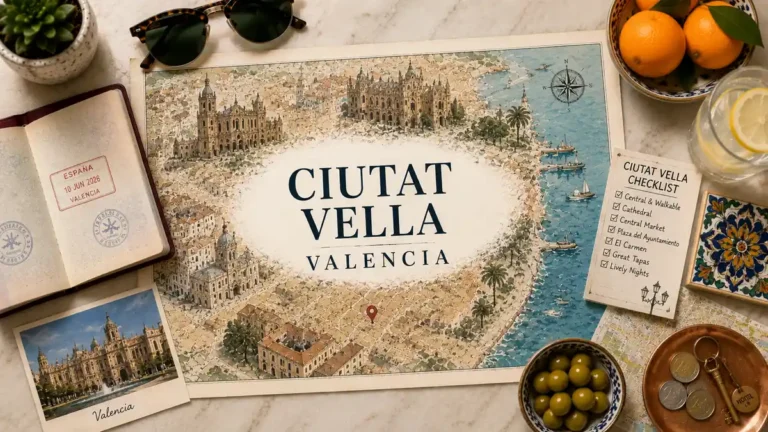
Day 1: Valencia’s Old Town (Ciutat Vella)
Start Day 1 at Mercado Central, then Lonja de la Seda, the Cathedral, and Plaza de la Reina. The whole old town is compact and walkable, so this loop runs in a logical line without backtracking. Morning markets first, monuments after, leaves the afternoon free for the surrounding lanes and squares.
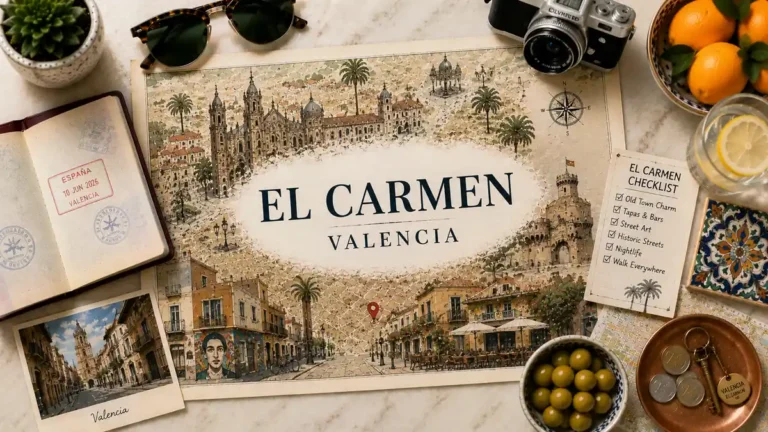
Open at the market while it is busy and the produce is fresh, then cross the square to the Gothic silk exchange before the midday crowds build. The Cathedral and Plaza de la Reina sit a few minutes further on, closing the morning loop in the heart of Ciutat Vella. With the anchors done by lunch, the afternoon belongs to the Barrio del Carmen — wandering, eating, and pausing in the squares with no fixed schedule.
- Mercado Central — start among the stalls inside the Modernista market hall.
- Lonja de la Seda — step into the Gothic silk exchange across the square.
- Valencia Cathedral — pause at the city’s central place of worship and bell tower.
- Plaza de la Reina — end in the main square ringed by cafés and lanes.
Day 2: City of Arts and Sciences and Turia Gardens
Spend Day 2 at the City of Arts and Sciences, reached on foot through Turia Gardens. The complex groups the Oceanogràfic, the Hemisfèric, and the Science Museum within a short walk of each other. Walking the dry riverbed park into the complex turns the journey itself into part of the day.
Pick your anchors rather than trying to do everything: the Oceanogràfic alone can absorb a half-day, so families often pair it with the Science Museum and leave the Hemisfèric as a shorter add-on. Booking the busiest attractions ahead is wise in peak season, though exact admission and hours shift over time and are best checked close to your visit. Approaching through Turia Gardens — the green former riverbed that arcs across the city — keeps the day on foot and frames the futuristic architecture as you arrive.
- Oceanogràfic — Europe’s large aquarium and the complex’s biggest single stop.
- Hemisfèric — the eye-shaped planetarium and large-format cinema building.
- Science Museum — hands-on galleries suited to families and a slower pace.
- Turia Gardens — the green riverbed path linking the centre to the complex.
Tours and activities
Book skip-the-line tickets, day trips and local tours with free cancellation on most activities.
You can also browse everything on getyourguide.com.
Tripstou may earn a commission if you book through this link, at no extra cost to you.
Day 3: Malvarrosa Beach and Albufera Nature Reserve
Use Day 3 for the coast — Malvarrosa beach, Albufera, or a mix of both. This is the route’s flexible day, set apart from the dense first two and shaped around what you most want. Both sit just south of the centre, so a short ride replaces the walking of earlier days.
Treat this as the day to slow down. Many visitors spend the morning on Malvarrosa and head to Albufera for a late lunch and sunset, while others commit the whole day to one or the other. Seasonal weather decides a lot here — beach time and lagoon boat trips are at their best in the warmer months — so keep the plan loose and read the forecast. For practical seasonal pointers on timing the coast, see our Valencia travel tips.
- Malvarrosa beach — wide city sand backed by a promenade of seafood terraces.
- Albufera Nature Reserve — a freshwater lagoon and rice fields just south of the city.
- Sunset boat trip — a short crossing of the lagoon as the evening light drops.
Beach or Albufera: how should you choose your Day 3?
Choose the beach for relaxing, and Albufera for paella, sunset boat trips, and birdlife. The beach suits travelers who want easy downtime close to the city after two busy days. Albufera rewards those chasing the landscape where paella was born and a memorable evening light.
This is the choice that sets the three-day route apart from a shorter trip, and it comes down to what you want from the day:
- Pick the beach if you want low effort and proximity — sand, a promenade lunch, and a quick return to the centre.
- Pick Albufera if you want scenery and a story — the rice paddies that gave paella its origin, a lagoon boat trip, and sunset over open water.
- Combine both if the weather is good — morning on Malvarrosa, then south to Albufera for a late paella lunch and the evening light.
For day-trippers short on time, the beach is the safer default; for food-led travelers, Albufera is the more distinctive call.
How the three zones connect (and how to move between them)
The old town is walkable, the City of Arts sits adjacent, and the coast needs a short ride south. Days 1 and 2 connect on foot, which keeps the historic and modern zones effortless to link. Only Day 3 calls for public transport, since the beach and Albufera lie outside the walkable core.
In practice, the first two days need almost no planning beyond comfortable shoes — the centre and the City of Arts are joined by the Turia Gardens path. The coast is the only leg where you will use the metro, tram, or a bus, and a tourist travel card can simplify those hops; the exact routes, fares, and card options are worth confirming in our getting around Valencia guide. If you are weighing what the transport and tickets add up to, the Valencia trip costs breakdown covers the budget side.
Where to base yourself for this 3-day route
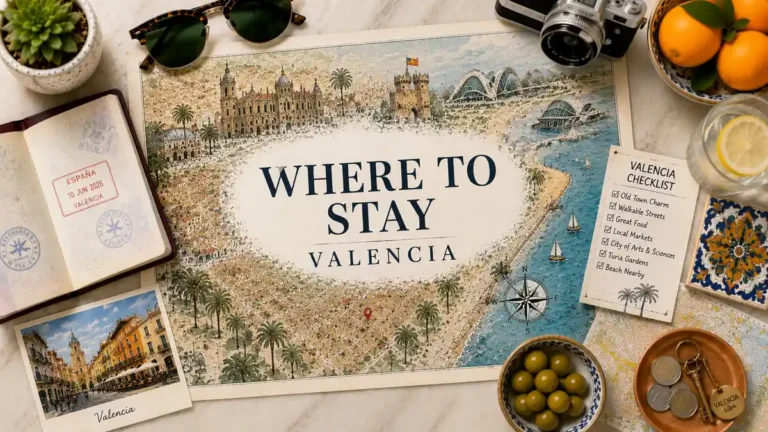
Base yourself centrally near the old town to keep Days 1 and 2 on foot. A central base puts the markets, monuments, and Turia Gardens within walking distance of your door. It also shortens the only transit day, since the coast is a quick hop from the centre.
For this specific route, central is the efficient choice: it removes commuting from your two busiest days and leaves transport for the coast alone. A beach base can work if relaxing by the sea is your priority, but it trades away the walkable convenience the old town and City of Arts reward. For a full neighbourhood-by-neighbourhood breakdown and where to actually book, see our guide to where to stay in Valencia.
Hotels and places to stay
Compare hotels, apartments and stays for your dates in one search.
Search hotels and stays on hotels.com →
Tripstou may earn a commission if you book through this link, at no extra cost to you.
Frequently Asked Questions
Is 3 days enough for Valencia?
Yes, three days is enough to enjoy Valencia’s highlights without rushing. It covers the old town, the City of Arts and Sciences, and the coast at one zone per day. You will resolve the headline route comfortably, though deeper museum visits or day trips need extra time.
What’s the difference between a 2-day and 3-day Valencia itinerary?
A 2-day Valencia itinerary covers the old town and the City of Arts, dropping the coast to save time. The third day is what adds Malvarrosa beach and Albufera, the route’s most relaxed stretch. For the shorter plan, see our 2-day Valencia itinerary.
Do you need a car for this 3-day Valencia route?
No, you do not need a car for this route. The old town and City of Arts are walkable, connected by Turia Gardens, and the coast is reachable by metro, tram, or bus. A car only adds parking hassle in the compact, well-connected centre.
When is the best time to do this 3-day itinerary?
Spring and early autumn are ideal, offering warm days for the coast without peak-summer crowds. Day 3’s beach and Albufera boat trips are best in the warmer months, while the old town and City of Arts work year-round. Check the forecast before committing your coast day.
Can you see Albufera and the beach in one day?
Yes, you can combine both on Day 3 when the weather cooperates. Spend the morning on Malvarrosa beach, then head south to Albufera for a late paella lunch and a sunset boat trip. Both sit just south of the centre, so the short hop between them is easy.
Is Valencia safe to walk during this itinerary?
Yes, Valencia is generally safe for visitors walking this route, including the old town and seafront. Standard city precautions against pickpockets in busy markets and on transport are enough. For a fuller rundown of areas and practical advice, see our guide on whether Valencia is safe.
Related Guides
- Valencia travel guide — the full hub for planning your trip beyond this route.
- Where to stay in Valencia — neighbourhoods and base options in depth.
- 2-day Valencia itinerary — the shorter route if you have less time.
- Getting around Valencia — metro, tram, bus, and tourist card details.
- Valencia trip costs — what three days typically adds up to.
- Valencia travel tips — seasonal and practical advice for the coast and city.
- Is Valencia safe — practical safety guidance for visitors.
Did this guide save you time or money? Tripstou is independent and reader-funded — if you'd like to give something back, you can support the site with a crypto contribution of any size.