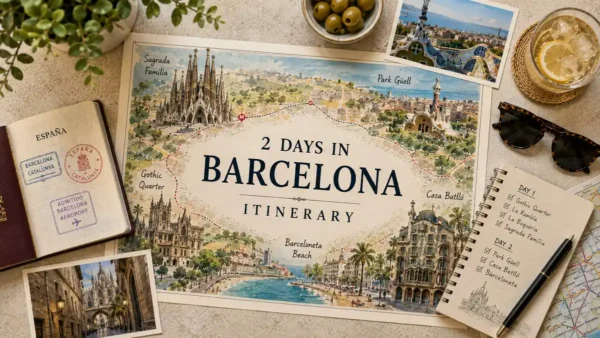
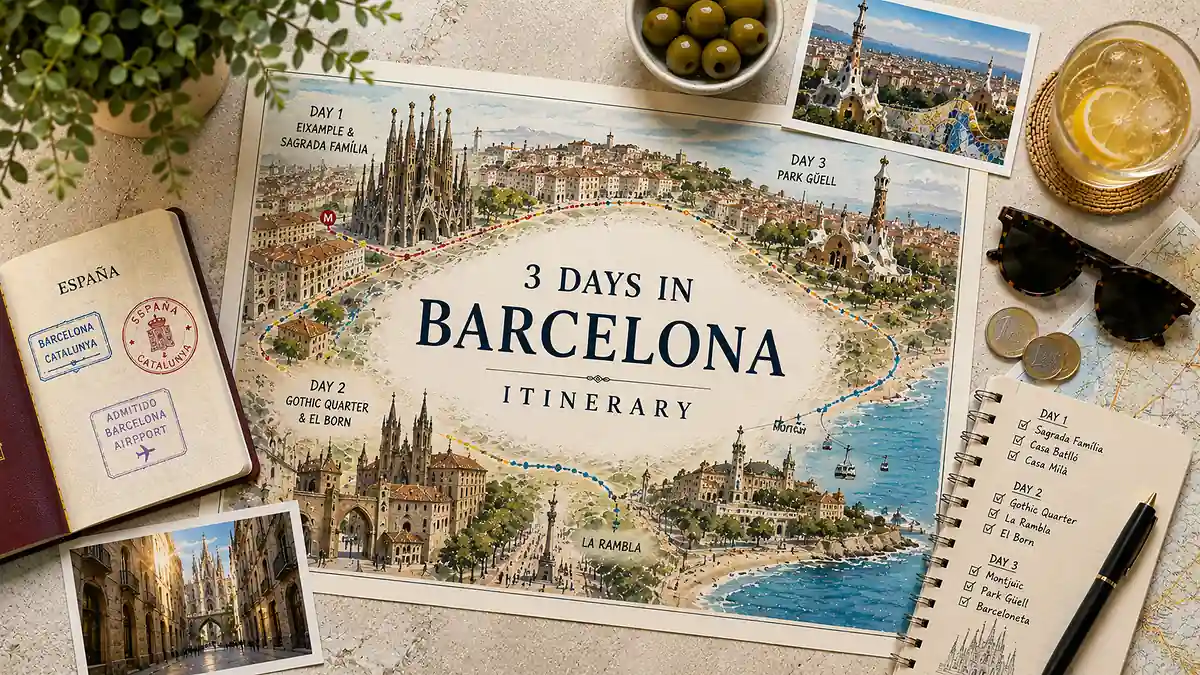
Spend Day 1 on Sagrada Família and the Eixample Gaudí core, Day 2 on the old city — Gothic Quarter, La Rambla, and El Born — and Day 3 on Montjuïc and Park Güell. Cluster each day by neighbourhood and book timed-entry Gaudí tickets ahead to avoid queues. Three days suits travelers who want the icons plus room to wander.
Three days in Barcelona is enough to do more than rush the icons — but only if you sequence the days by geography and time them around the crowds. The mistake most visitors make is zig-zagging across the city, losing an hour here and a queue there. This itinerary fixes that. It clusters each day around one walkable area, puts the busiest sights first thing in the morning, and reserves the third day for the breadth and slower pace that a two-day trip simply cannot fit. You will know what to book ahead, what order to walk things in, and exactly what the extra day buys you.
Editorial Note
A route plan for three days in Barcelona: which neighbourhood cluster fills each day, in what order, at what pace, and what the third day adds. It is not a broad Barcelona guide, a things-to-do list, a hotel roundup or a general trip-planning overview.
Alex Perrut, working in tourism since 2015, reviewed this itinerary for the Tripstou editorial team. Produced with AI assistance; our editorial process explains how.
Last factual review: June 3, 2026.
Official sources consulted: travel-europe.europa.eu, european-union.europa.eu.
The 3-Day Barcelona Route at a Glance, and Why It Runs in This Order
The route anchors Day 1 in the Eixample around Sagrada Família, Day 2 in the old city, and Day 3 on Montjuïc and Park Güell. This order groups each day into one walkable cluster, so you move within neighbourhoods rather than across the whole city. The result is far less backtracking and far less time lost in transit.
The logic is simple: Barcelona’s headline sights fall into three natural geographic groups, and each maps cleanly onto a day. Day 1 stays inside the modernista grid of the Eixample. Day 2 stays inside the medieval core between Plaça de Catalunya and the waterfront. Day 3 takes the higher, more spread-out sights — the Montjuïc hill and Park Güell above Gràcia — when you have the slack to enjoy them slowly. Building the trip this way means you rarely cross the city twice in one day. This route sits under our wider Barcelona travel guide if you want the full-city context around it.
| Day | Cluster | Anchor sight | Pace |
|---|---|---|---|
| Day 1 | Eixample Gaudí grid | Sagrada Família | Early start, full day |
| Day 2 | Old city on foot | Gothic Quarter and El Born | Walkable, moderate |
| Day 3 | Montjuïc and Park Güell | Park Güell terraces | Slower, half-day free |
The core rule is to group sights by neighbourhood, hit the crowd-heavy icons first thing in the morning, and keep each day’s movement tight within one cluster. Backtracking is the single biggest waste of time in a short city trip. Clustering solves it, and morning-first timing solves the queues.
Three principles do most of the work. First, one cluster per day, so you walk within an area instead of crossing the city repeatedly. Second, front-load the busiest sights — Sagrada Família and Park Güell — to the start of their day, before crowds and lines build. Front-loading the icons also frees your afternoons for slower, queue-free neighbourhood walking. Third, leave the most spread-out, higher sights (Montjuïc, Park Güell) for the day you have the most slack, so a longer hop does not derail a packed schedule. Apply these and each day flows in roughly one direction.
Within a cluster you will mostly walk, but the longer hops between clusters are where the metro earns its keep — see getting around Barcelona for moving between areas without losing the morning to logistics.
Can you do a 3-day Barcelona itinerary without a car?
Yes, a car is unnecessary for three days in Barcelona and often a liability. Each day clusters into one walkable area, so you mostly travel on foot. For the longer hops between clusters, the metro covers the gaps quickly, which is exactly why the route is built around neighbourhoods.
What to Book Ahead Before You Go
Book timed-entry tickets for the major Gaudí sites in advance — Sagrada Família and Park Güell are the ones worth reserving, with Casa Batlló and Casa Milà close behind. Almost everything else on this route is flexible and can be decided on the day. Reserving the timed sights is what keeps the morning-first plan intact.
The headline Gaudí attractions run on timed entry and the best slots go early, so leaving them to chance can blow up the day’s sequence. Lock those in before you travel and slot them into the start of their day. The old-city walking on Day 2, the Montjuïc wandering, and your meals need no reservations at all — keep that flexibility deliberately, so you can adjust pace as you go. For the wider set of practical do’s and small logistics, our Barcelona travel tips cover the rest.
Tours and activities
Book skip-the-line tickets, day trips and local tours with free cancellation on most activities.
You can also browse everything on getyourguide.com.
Tripstou may earn a commission if you book through this link, at no extra cost to you.
Day 1: Sagrada Família and Eixample’s Gaudí Core
Start Day 1 at Sagrada Família as early as your timed entry allows, then walk the Eixample’s Gaudí houses through the afternoon. The basilica anchors the day because it is the city’s most-visited sight and rewards an early, quieter slot. Everything else on Day 1 sits within a short walk of it.
The morning belongs to Sagrada Família. Book the earliest entry you can and give it unhurried time. From there, the afternoon flows downhill into the Passeig de Gràcia spine, where Casa Batlló and Casa Milà (La Pedrera) sit a few blocks apart — both Gaudí, both walkable, no transport needed. Save the interiors you most want and admire the rest from the street if energy runs low. The evening suits a relaxed dinner in the Eixample or a wander back toward the centre.
- Morning: Sagrada Família on an early timed entry.
- Afternoon: Passeig de Gràcia — Casa Batlló and Casa Milà on foot.
- Evening: Dinner in the Eixample at an unhurried pace.
If Day 1 is also your arrival day, factor in the trip in from the airport before you commit to an early basilica slot — our guide on getting from the airport covers your options so the first morning does not get squeezed.
Day 2: The Gothic Quarter, La Rambla, and El Born
Day 2 is entirely on foot through the old city — the Gothic Quarter, the La Rambla spine, and El Born, ending at the Picasso Museum. These districts press right up against each other, so the whole day connects without a single metro ride. That walkability is the payoff: you cover the medieval core at a human pace.
Begin in the Gothic Quarter’s lanes around the cathedral, drift down to La Rambla, then cross into El Born for the Picasso Museum and the Santa Maria del Mar church. The order is flexible because everything is so close; the only rule is to keep moving in one direction instead of doubling back. Leave time to simply get lost in the alleys — that is half the point of this day. Close the evening with tapas in El Born or along the waterfront edge.
La Rambla and the crowded old-city lanes are prime pickpocket territory, so keep bags zipped and phones away in the busiest stretches — stay aware of pickpockets and you will not have a problem.
Day 3: Montjuïc, Park Güell, and Slow Barcelona
Day 3 takes the Montjuïc hill and Park Güell at an unhurried tempo, leaving a half-day free for neighbourhood wandering and food. This is the day the trip slows down. With the must-see icons handled, you can breathe — see the higher, more spread-out sights without racing, and still keep hours in reserve.
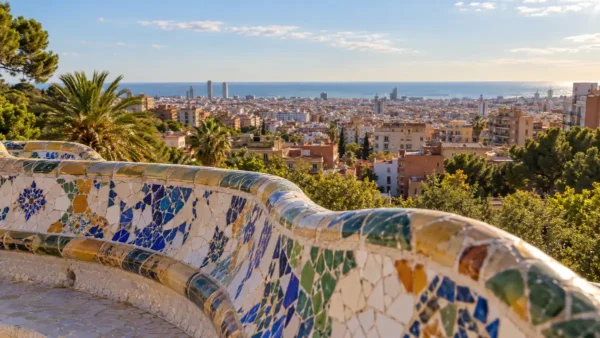
Group Montjuïc’s hilltop attractions together in one block — the castle, the gardens, and the viewpoints reward a leisurely loop, not a sprint. Pair it with a timed visit to Park Güell on the city’s northern edge, where Gaudí’s terraces are best enjoyed slowly. Then keep the rest of the day open: wander Gràcia or El Raval, sit in a square, and eat without a clock running. That open half-day is the difference between seeing Barcelona and feeling it.
Because Day 3 leans on a relaxed neighbourhood feel, where you sleep shapes how easy it is to drift between these areas — decide where to base yourself with that slower day in mind.
Hotels and places to stay
Compare hotels, apartments and stays for your dates in one search.
Search hotels and stays on hotels.com →
Tripstou may earn a commission if you book through this link, at no extra cost to you.
What the Third Day Unlocks That Two Days Forces You to Cut
The third day buys you Montjuïc, a properly paced Park Güell, the El Born and El Raval neighbourhoods, and slack time — none of which survive a two-day compression. A 48-hour trip can only protect the headline Gaudí sights and the old-city core. Everything that gives Barcelona its texture is the first casualty when the clock tightens.
On a two-day plan, Montjuïc gets dropped entirely, Park Güell becomes a rushed add-on if it survives at all, and the wandering hours vanish. The third day is not “more of the same” — it changes the kind of trip you have. It converts a checklist sprint into a route with room to slow down, double back to a square you liked, or follow a street that looked interesting. That breadth is precisely the value this length earns.
- Montjuïc’s hilltop sights, which a two-day plan cuts first.
- Park Güell at a real pace instead of a rushed bolt-on.
- El Born and El Raval beyond the single old-city pass.
- Slack time to wander, linger, and eat without a clock.
Three days rarely feels too long for a first visit. If you only have two days, do not stretch this plan thin — follow the 2-day Barcelona itinerary instead, which is built to protect the essentials under tighter time rather than add breadth.
Beyond the Route: Budget and the Wider City
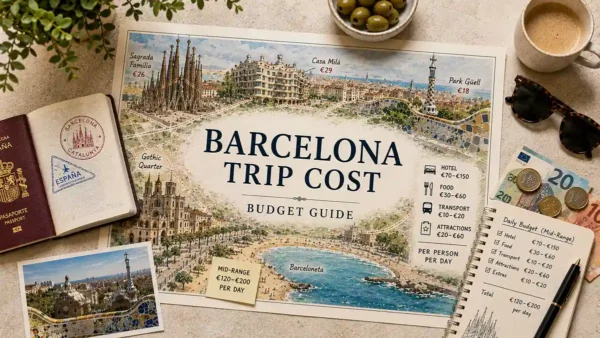
- Barcelona trip cost — what three days typically adds up to.
- Barcelona travel guide — the full-city hub this route sits under.
Did this guide save you time or money? Tripstou is independent and reader-funded — if you'd like to give something back, you can support the site with a crypto contribution of any size.