No other city works quite like Venice. It has no roads and no cars — just a maze of canals, footbridges, and narrow lanes spread across a cluster of islands in a lagoon. You explore it on foot and by boat, which is exactly why a first visit needs a little orientation before you arrive. This guide gives you the full shape of a Venice trip: how the city actually works, how long to stay, when to go, how to move around, what to prioritize, where to base yourself, and roughly what to expect on cost. Where a decision runs deeper, it points you to the right specialist guide so you can plan the details with confidence.
Quick Answer
Venice is a compact car-free island city you explore on foot and by vaporetto. Most first-timers need two to three days to see the icons without rushing. Base near the center, visit in shoulder season for thinner crowds, and let this guide route you to the deeper planning decisions.
Trust Layer
Tripstou city guide for travelers planning a city trip. Covers trip length, stay style, season, cost, and mobility tradeoffs.
Produced with AI assistance and reviewed by Alex Perrut, working in tourism since 2015, for the Tripstou editorial team. See our editorial process for details.
Last factual review: July 15, 2026.
Official sources consulted: italia.it, enit.it.
Key Takeaways
- Venice is a car-free island city you cross on foot and by vaporetto, so pack light and wear comfortable shoes.
- Two days covers the icons; add a third only if you want the lagoon islands like Murano and Burano.
- Visit in spring or autumn to balance mild weather against the summer heat and peak-season crowds.
- Stay central near San Marco for convenience, or in Cannaregio, Dorsoduro, or Castello for better value and calm.
- Expect Venice to cost more than most Italian cities, driven mainly by island lodging and dining near the icons.
- Getting lost is part of the experience — the quiet back canals reward wandering away from the main sights.
Table of Contents
Is Venice worth visiting, and what makes it different?
Yes, Venice is worth visiting, and no other city feels like it. It is a car-free city built across more than 100 small islands, laced by canals and linked by bridges. You move entirely on foot and by boat, which turns simple sightseeing into part of the experience.
What sets Venice apart is not any single monument but the way the whole place is built. Streets end at water. The “main road” is a canal. Because nothing rolls on wheels, the usual city rhythm disappears and the noise drops with it. That is the trade many travelers come for. If you want to understand how the wider lagoon, its outer islands, and the mainland fit around the historic center, the Venice region guide covers that broader picture — this page stays focused on the city itself.
How does a car-free island city actually work?
A car-free island city works by making walking the default and boats the exception. Almost every trip inside the historic center happens on foot, across a web of alleys, squares, and small bridges. For longer distances — down the Grand Canal or out to the lagoon islands — you take the vaporetto, the local water bus. The best mental model is simple. Expect to get lost, and treat it as part of the plan. Signs pointing to San Marco and Rialto appear on walls across the city, so you are never truly stranded, and the wrong turn is often where Venice is at its best.
How many days do you need in Venice?
Most first-timers need two to three full days in Venice to see the icons without rushing. Two days covers the essentials at a steady pace. A third day adds room for the lagoon islands, a slower morning, or the quieter corners that make the city memorable. One day is possible but limiting.
Two days is the practical minimum for a first visit: one day around San Marco, the basilica, and the Doge’s Palace, and a second for Rialto, a Grand Canal ride, and unhurried wandering. A third day is where the trip relaxes. It gives you time for Murano and Burano, a museum you actually want to see, or simply a morning with no fixed plan.
A third day earns its place mainly if you plan to reach the lagoon islands — Murano and Burano each eat up half a day once you count the vaporetto time out and back, so they rarely fit a two-day trip without cutting the center short.
For a proper day-by-day plan, see the 2-day Venice itinerary or the 3-day Venice itinerary, which sequence the sights so you are not crossing the city twice.
When is the best time to visit Venice?
Spring and autumn are the best times to visit Venice, balancing mild weather against thinner crowds. Summer brings heat, peak prices, and the heaviest tourist flow. Late autumn and winter are quiet and atmospheric but carry the risk of acqua alta, the seasonal high water that can briefly flood low-lying areas.
Shoulder season is the sweet spot for most travelers. Days are comfortable, evenings are pleasant, and the alleys are busy without being impassable. Summer is the hardest sell: the heat sits heavy over the canals and day-tripper crowds peak around the main sights. Winter is underrated for atmosphere, with mist over the water and far fewer people, though shorter days and cold change the mood.
Acqua alta rarely wrecks a trip. It usually peaks for a few hours around high tide, raised walkways keep the main routes crossable, and a cheap pair of boots handles the rest. For how Venice’s seasons sit inside the wider Italian calendar, the guide to the best time to visit Italy gives the national context.
Getting around Venice: walking and the vaporetto
You get around Venice on foot for almost everything and by vaporetto for longer hops. The vaporetto is the city’s water bus, useful for the Grand Canal, outlying stops, and the lagoon islands. Gondolas are a classic experience, not a practical way to travel. There are no cars, taxis, or buses on the islands.
Walking is faster than it looks. The historic center is compact, and most places are twenty minutes apart or less on foot. The vaporetto earns its keep for distance — the full length of the Grand Canal, the outer islands, or tired legs at the end of a day. Wear shoes you can walk miles in. Bridges have steps, so pack light and skip wheeled suitcases where you can.
Fares, route maps, and pass options change and are best checked close to your trip; the Venice transport guide keeps those current. If you are flying in, the Venice airport transport guide walks through the water and land routes from the airport into the city.
What are the main things to see in Venice?
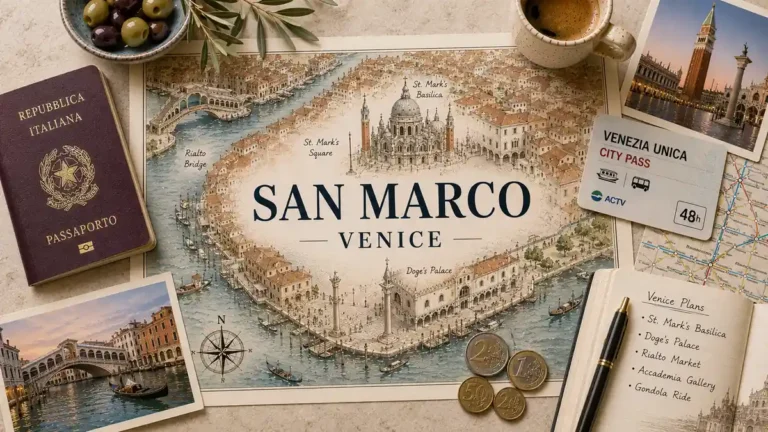
Venice’s unmissable sights are Piazza San Marco, the Doge’s Palace, the Rialto Bridge, and the Grand Canal. St Mark’s Basilica sits on the square itself. These core icons cluster around the center and anchor most first visits. The other half of Venice reveals itself when you wander away from them and simply get lost.
The headline sights are close together, which makes a first day easy to shape. Piazza San Marco, the basilica, and the Doge’s Palace form one cluster; the Rialto Bridge and its market sit a short walk north; the Grand Canal threads between them. Beyond the icons, the reward is atmosphere — quiet canals in Cannaregio, artisan workshops, and squares where the day-trip crowds never reach. For a ranked, detailed rundown of what to prioritize and skip, see the guide to the best things to do in Venice.
Tours and activities
Book skip-the-line tickets, day trips and local tours with free cancellation on most activities.
You can also browse everything on getyourguide.com.
Tripstou may earn a commission if you book through this link, at no extra cost to you.
Which neighborhood should you stay in?
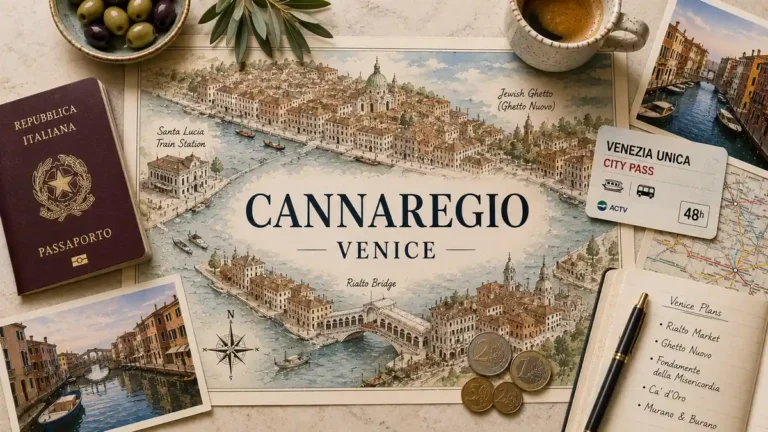
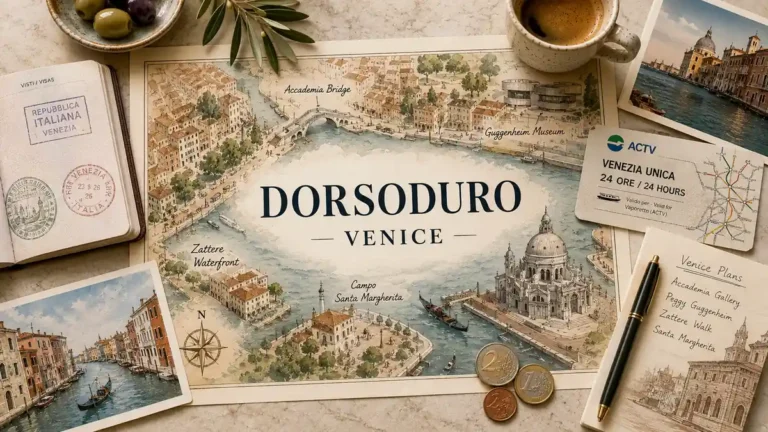
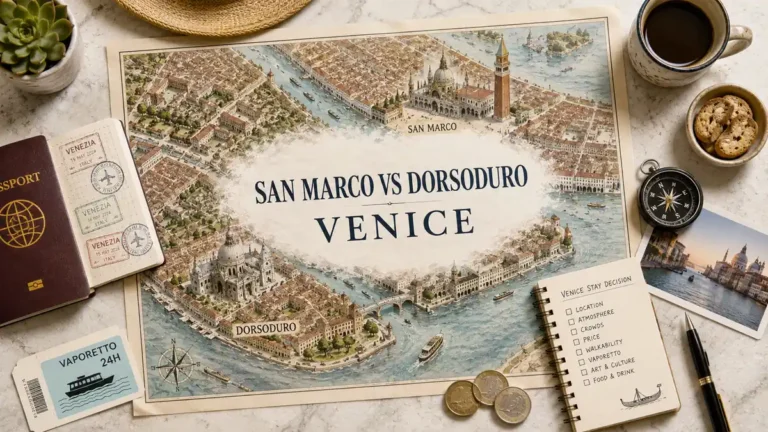
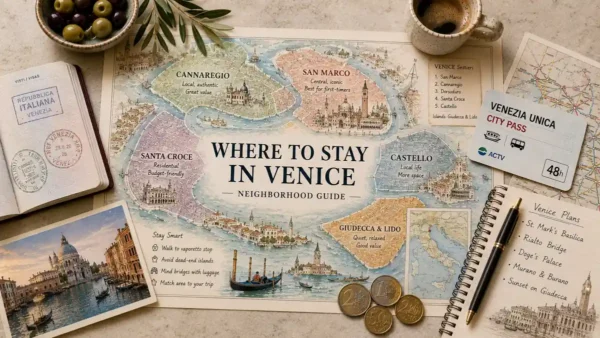
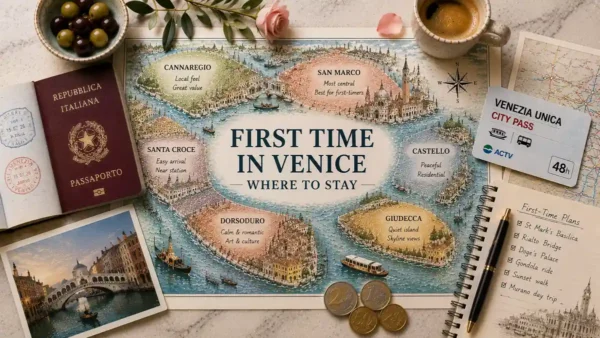
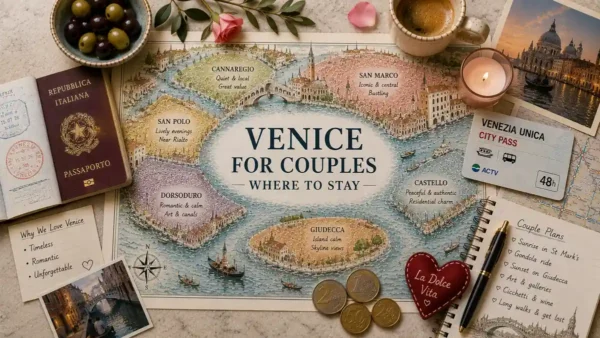
Stay in San Marco or near Rialto for your first visit if convenience matters most. These central sestieri put the icons on your doorstep but cost the most and stay busy. The quieter sestieri — Cannaregio, Dorsoduro, and Castello — trade a few minutes of walking for better value and a more local feel.
Venice divides into six sestieri, and the choice is mostly about how central and how lively you want to be. San Marco is the most convenient and the most expensive. Dorsoduro leans arty and relaxed. Cannaregio offers everyday Venice and better-value rooms. Castello is residential and calm. Each suits a different traveler.
The true cost of a central base is more than the nightly rate — it is the crowd you wake into. A bridge or two of distance buys back the early-morning quiet before the day-trippers arrive, which is often the best light and the emptiest streets you will get.
- First-timers who want the icons close: see where to stay for a first visit.
- Couples after atmosphere: see the best areas for couples.
- Families needing space and calm: see family-friendly areas.
- Nightlife and later evenings: see where to stay for nightlife.
- Budget travelers: see the best value areas.
- Higher-end stays: see the top luxury areas and the pick of luxury hotels in Venice.
For the full area-by-area breakdown before you book, start with the Venice where-to-stay guide.
Hotels and places to stay
Compare hotels, apartments and stays for your dates in one search.
Search hotels and stays on hotels.com →
Tripstou may earn a commission if you book through this link, at no extra cost to you.
How much does a Venice trip cost?
A Venice trip costs more than most Italian cities, driven mainly by lodging and dining near the icons. Island hotels command a premium, and restaurants on the busiest squares charge for the location. You can still visit affordably by basing slightly out from the center and eating where locals do.
Accommodation is where Venice hits hardest, especially on the island itself and in peak months. Food follows the same logic: a sit-down coffee on Piazza San Marco and a canal-side dinner are priced for the setting. The good news is that small choices move the total a lot. Eat where the menus are in Italian first, drink coffee standing at the bar, and pick a base a few minutes out.
The fastest budget leak in Venice hides in the arrival transfer and the view-priced coffee, both easy to plan around once you know they are coming. For real figures and a proper breakdown, see the Venice trip cost guide, and for how it fits a wider trip, the Italy trip cost guide.
Venice etiquette: how to respect the city
Respecting Venice mostly means moving with the city, not through it. Keep to the walking flow on narrow streets and bridges, avoid picnicking or swimming in restricted spots, and mind that a visitor access fee applies to day-trippers on certain peak days. Small courtesies keep this fragile, heavily visited city livable.
Venice is a living city under real pressure from tourism, so a little awareness goes a long way. Don’t stop dead on bridges or in narrow lanes where people are moving through. Keep noise down in residential sestieri at night. Don’t sit to eat on monument steps or dip into the canals — both are discouraged and, in places, fined. The access fee for day visitors on peak days changes in its rules and amount, so treat the details as something to confirm close to your trip; the Venice tips guide keeps the current mechanics and etiquette specifics up to date.
Frequently Asked Questions
Do you need to book Venice attractions in advance?
Yes, book the busiest attractions ahead, especially St Mark’s Basilica and the Doge’s Palace, where timed-entry and skip-the-line tickets save long queues in peak months. Quieter sights and churches rarely need reservations. For the current booking rules and which sights to prioritize, see the Venice tips guide.
What is the Venice day-tripper access fee?
The access fee is a charge for day visitors entering Venice’s historic center on certain peak-demand days. Overnight guests staying in the city are generally exempt, since they already pay a lodging tax. The exact days, amount, and rules change often, so confirm them close to your trip.
What is acqua alta and when does Venice flood?
Acqua alta is the seasonal high water that briefly floods Venice’s lowest-lying areas, most often between autumn and early spring around high tides. It usually lasts a few hours, and raised walkways keep the main routes crossable. A cheap pair of waterproof boots handles the rest.
Is Venice safe for tourists?
Yes, Venice is one of Italy’s safest cities for visitors, with very little violent crime. The main nuisances are pickpockets in crowded spots like San Marco and the Rialto Bridge, plus slippery bridges after rain. Watch your bags in crowds and take the steps carefully. See the Venice safety guide.
Can you visit Venice as a day trip from another city?
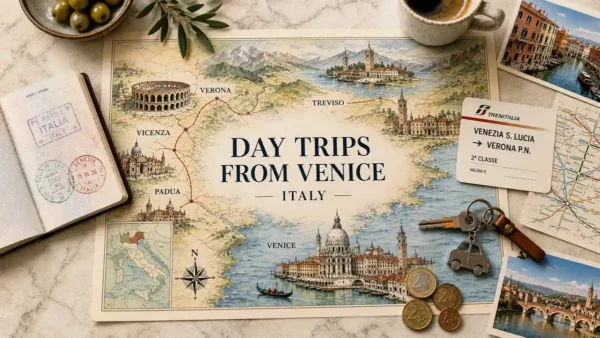
Yes, Venice works as a day trip from cities like Padua, Verona, or Bologna, all a short train ride away. A single day covers San Marco, Rialto, and a Grand Canal ride, but you miss the quiet early mornings and evenings that make Venice special. Staying overnight rewards you more.
Do you need cash in Venice, or can you pay by card?
Cards are widely accepted across Venice for hotels, restaurants, museums, and vaporetto tickets, so you rarely need much cash. Keep a small amount for tiny cafés, market stalls, and public toilets, which sometimes prefer coins. Contactless works on most vaporetto readers, making day-to-day spending simple.
Related Guides
Use these guides to plan each part of your Venice trip in depth and to place it inside a wider Italy route.
- Region context: the Venice region guide for the lagoon, outer islands, and mainland.
- Itineraries: the 2-day and 3-day Venice itineraries, plus a broader Italy itinerary.
- Getting there and around: the Venice transport guide and airport transport guide.
- Where to stay: the Venice where-to-stay guide.
- Cost: the Venice trip cost guide.
- What to do: the best things to do in Venice.
- Safety: the Venice safety guide.
- Wider Italy: the Italy travel guide and the best places to visit in Italy.
Did this guide save you time or money? Tripstou is independent and reader-funded — if you'd like to give something back, you can support the site with a crypto contribution of any size.