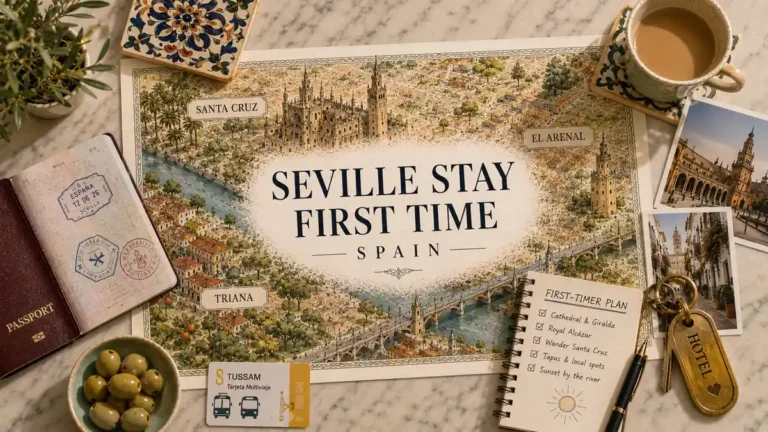
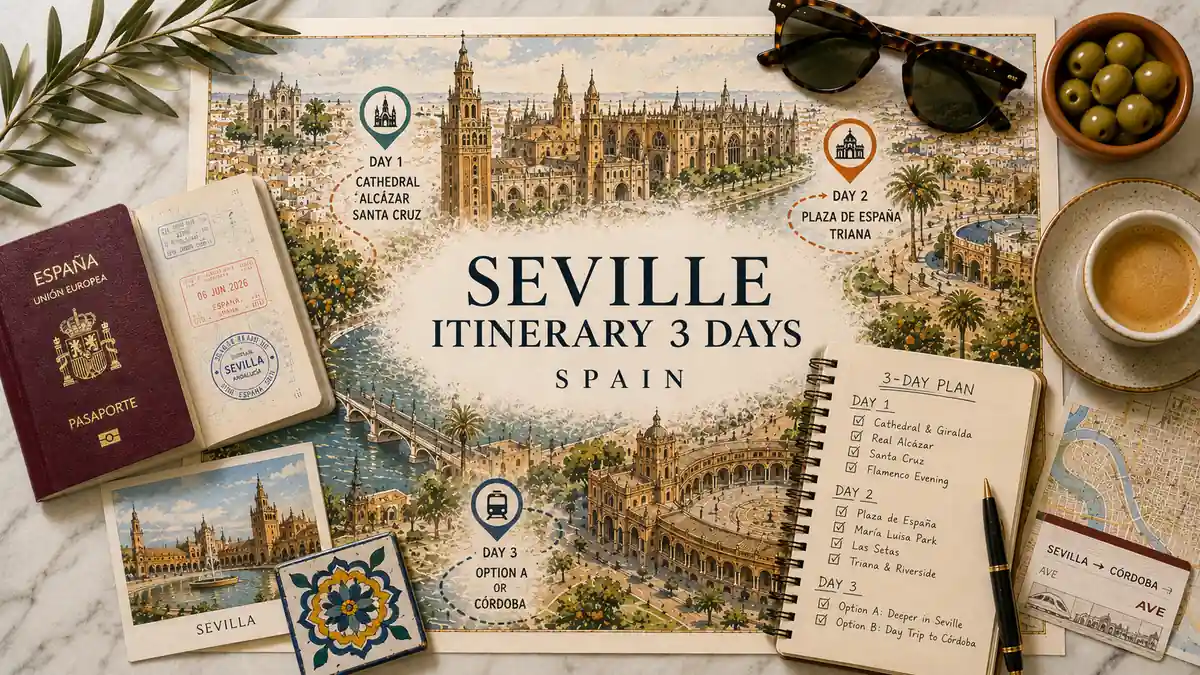
Three days is the comfortable sweet spot for Seville. The historic core is compact and walkable, so two days are enough to see the headline sights without rushing, and a third day gives you room to either go deeper in the city or escape on a day trip. The plan below clusters stops by geography to avoid backtracking, slots a flamenco evening where it belongs, and resolves the one decision that defines a three-day trip here: how to spend Day 3. You get a confident Day 1, Day 2, and Day 3 sequence built around walking distances and the midday heat, not a list of everything in the city. Start with the cathedral cluster, work outward across the river, then choose your third-day fork.
Quick Answer
Three days covers Seville’s core on foot: Day 1 the cathedral cluster, Day 2 the plaza, park, and Triana. Spend Day 3 going deeper in the city or take a day trip, with Córdoba the classic choice. Book the Alcázar and Cathedral ahead, and pace outdoor stops around the midday heat.
Trust Layer
Tripstou itinerary guide for travelers planning a route. Covers pacing, stop count, stop order, base logic, and trip length.
Produced with AI assistance and reviewed by Alex Perrut, working in tourism since 2015, for the Tripstou editorial team. See our editorial process for details.
Last factual review: June 6, 2026.
Official sources consulted: travel-europe.europa.eu, european-union.europa.eu.
Key Takeaways
- Three days is the comfortable sweet spot for Seville: two days for the core, plus a flexible third day.
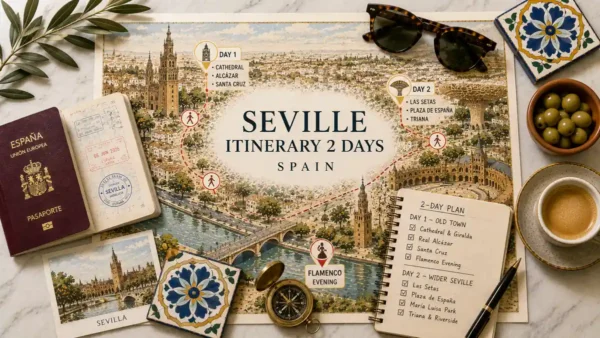
- Day 1 covers the monumental heart on foot: Cathedral and Giralda, Real Alcázar, Santa Cruz, then evening flamenco.
- Day 2 swings wider: Plaza de España and María Luisa Park, the Setas, then across the river into Triana.
- Day 3 forks two ways: a slower in-city day or a day trip, with Córdoba the classic rail choice.
- Cluster stops by geography rather than theme to avoid backtracking and stay almost entirely on foot.
- Book the Alcázar and Cathedral ahead and pace open-air stops around the intense midday heat.
Table of Contents
Is Three Days the Right Length for Seville?
Three days is the ideal length for a relaxed, complete Seville trip. Two days cover the essential monuments and neighborhoods, and the third day adds real depth or a day trip without feeling stretched. It is enough time to see the city properly while keeping a comfortable, unhurried pace.
The reason is Seville’s geography. The headline sights cluster tightly in the old center, so most of your sightseeing happens on foot within a short radius. Two days handle the cathedral cluster, the Alcázar, Plaza de España, and Triana comfortably. The extra day is where three days earns its keep: it converts a packed weekend into a measured trip, giving you space to revisit a favorite neighborhood, slow down by the river, or leave the city entirely for the morning.
Three days suits first-time visitors who want the full picture without rushing, and couples or families who prefer one well-paced day at a time. If your schedule is tighter, the shorter 2 days in Seville itinerary covers the same core in a faster sequence. For the broader picture of the city beyond a fixed route, the full Seville guide sets the context this plan builds on. The main trade-off of three days is cost and time off; if both are tight, two focused days still deliver the essentials.
How to Structure Three Days in Seville
Plan two anchored days, then keep Day 3 flexible. Days 1 and 2 form the proven walkable core: the cathedral cluster first, then the plaza, park, and Triana. Day 3 is the flexible fork, used to go deeper in the city or take a single day trip, depending on your pace and interests.
This structure works because it groups stops by geography rather than theme, which is what keeps a Seville trip efficient. Day 1 stays inside the monumental heart around the Cathedral and Alcázar. Day 2 swings to the wider city: Plaza de España and María Luisa Park to the south, the Metropol Parasol to the north, then across the Guadalquivir into Triana. Clustering this way means almost no backtracking and very little reliance on transport during the day.
Where you sleep shapes how smoothly this route runs, since a central base puts both anchored days within walking reach; the where to stay in Seville guide covers which areas anchor the route best. Because the core is so compact, you can also rely on walking for most of the plan, with getting around Seville useful mainly for arrival, departure, and any Day 3 day trip. The trade-off of locking Days 1-2 is rigidity, but that structure is exactly what frees Day 3 to flex around your interests.
Hotels and places to stay
Compare hotels, apartments and stays for your dates in one search.
Search hotels and stays on hotels.com →
Tripstou may earn a commission if you book through this link, at no extra cost to you.
Day 1: Cathedral, Real Alcázar, and Santa Cruz
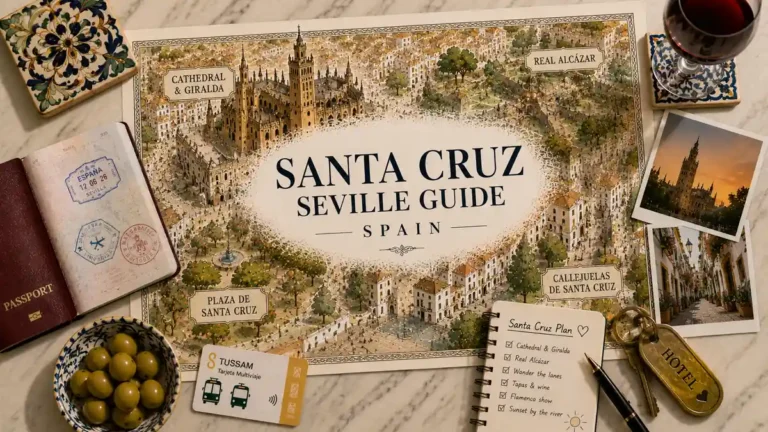
Start at the Cathedral cluster and work outward on foot. Day 1 covers Seville’s monumental heart in walking order: the Cathedral and La Giralda first, then the Real Alcázar next door, then the lanes of Barrio Santa Cruz, closing with a flamenco show in the old center. Everything sits within a few minutes’ walk.
This is the densest day of the trip, so the sequence matters. The Cathedral and Alcázar are the two ticketed sights you should see early, while energy and patience are high. Santa Cruz then fills the slower afternoon, and flamenco gives the evening a fixed anchor. Tackle the stops in this order and the whole day flows downhill from one to the next.
Morning: Seville Cathedral and La Giralda
Open Day 1 at Seville Cathedral and climb La Giralda. As the largest Gothic cathedral in the world and part of a UNESCO-listed complex, it is the natural starting point and orients you in the old center. Go early to see it before the heat and the largest crowds build.
Midday: Real Alcázar
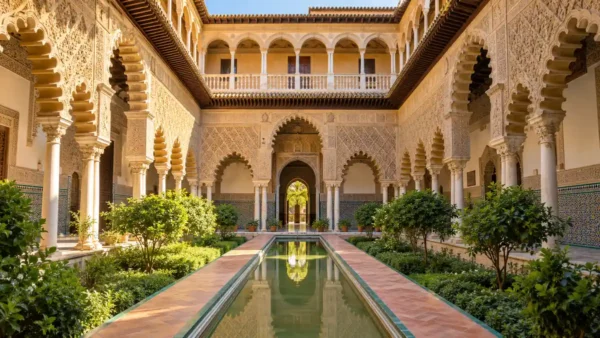
Move next door to the Real Alcázar after the Cathedral. The royal palace complex, also UNESCO-listed, sits a short walk away and rewards a couple of unhurried hours among its courtyards and gardens. Pairing the two monuments back to back is the most efficient use of the morning into midday.
Afternoon: Barrio Santa Cruz
Spend the afternoon wandering Barrio Santa Cruz. The old Jewish quarter sits directly against the Cathedral and Alcázar, so there is no transfer involved. Its shaded, narrow lanes and small plazas make it the ideal slower-paced stop for the hottest part of the day.
Evening: Flamenco in the Old Center
End Day 1 with a flamenco show in the old center. An evening performance is the natural anchor after a full day on foot and keeps you within the same walkable area. Book your spot ahead, as the well-regarded venues fill quickly; show times and prices vary, so confirm directly when you reserve.
Tours and activities
Book skip-the-line tickets, day trips and local tours with free cancellation on most activities.
You can also browse everything on getyourguide.com.
Tripstou may earn a commission if you book through this link, at no extra cost to you.
Day 2: Plaza de España, Setas, and Triana
Pair the plaza and park with the Setas, and end the day in Triana. Day 2 swings to the wider city: Plaza de España and María Luisa Park in the morning, the Metropol Parasol (Setas) at midday, then across the river into Triana for the afternoon and evening. The route fans out from the center and loops back over the Guadalquivir.
The logic of Day 2 is to balance open-air landmarks with shaded indoor time and finish somewhere with atmosphere after dark. Plaza de España is best seen earlier, before the sun is overhead. The Setas break up the middle of the day, and Triana, across the river, gives the evening its character. Take the stops in this order and you move with the heat, not against it.
Morning: Plaza de España and María Luisa Park
Begin Day 2 at Plaza de España and María Luisa Park. The grand semicircular plaza and its adjoining park are among Seville’s most photographed spots and are best enjoyed in the cooler morning light. Allow time to walk the plaza slowly and to stroll the shaded paths of the park.
Midday: Metropol Parasol (Setas de Sevilla)
Head to the Metropol Parasol, known locally as the Setas, around midday. The vast wooden structure marks the modern center north of the Cathedral and offers elevated walkways with city views. It works well as a midday stop between the morning park and the afternoon river crossing.
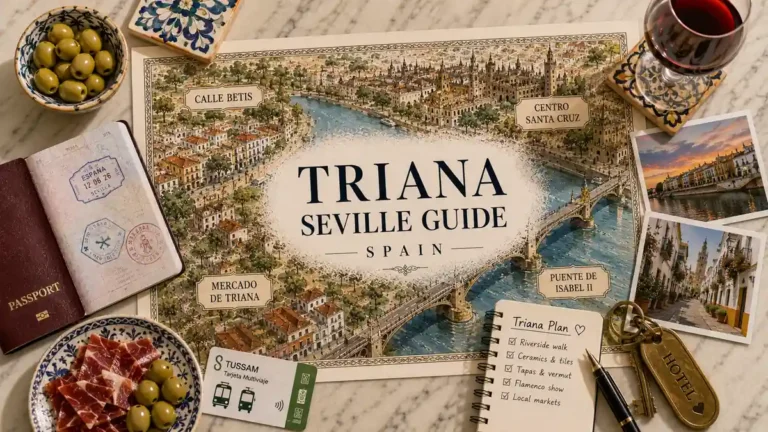
Afternoon: Triana and Calle Betis
Cross the Guadalquivir into Triana for the afternoon and evening. The traditional neighborhood on the river’s west bank is known for its ceramics, tile-front buildings, and tapas, with Calle Betis offering riverside views back toward the old center. It is a fitting, lively place to close Day 2.
Day 3: Stay in the City or Take a Day Trip
Use Day 3 either for a slower city day or a single day trip. Stay in Seville to go deeper into Triana, the riverside, the markets, Torre del Oro, and the Museo de Bellas Artes, or take a high-speed-rail day trip, most often to Córdoba. Both are strong; pick by your travel pace.
This is the day that defines a three-day Seville trip, so commit to one fork instead of splitting it. The in-city option suits travelers who would rather absorb the city than spend a morning in transit. The day-trip option suits those who want a second Andalusian highlight while based in Seville. Córdoba is the most cited choice because it sits roughly 45 minutes away by high-speed rail, making a there-and-back day genuinely comfortable.
Compare the two forks at a glance before you commit.
| Factor | Slower day in Seville | Day trip (e.g. Córdoba) |
|---|---|---|
| Best for | Travelers who prefer a relaxed pace | Travelers wanting a second highlight |
| Time in transit | Minimal; everything is walkable | Around 45 minutes each way by rail |
| Main focus | Triana, riverside, markets, museums | A compact historic city for a day |
| Planning effort | Low; no tickets or schedules needed | Higher; book rail seats in advance |
If you lean toward the day trip, plan the rail leg ahead and check the getting around Seville guide for the practical side of getting in and out of the city; fares, schedules, and station detail change, so confirm them when you book. Either fork keeps Day 3 unhurried. The main trade-off is straightforward: the day trip trades a few hours of travel for a second destination, while the slower city day trades that variety for depth and rest.
Option A: A Slower Day in Seville (Triana, Riverside, Markets)
A slower Day 3 stays entirely within Seville at walking pace. It suits travelers who would rather know one city well than rush a second. Spread the day across:
- A deeper wander through Triana and the Mercado de Triana.
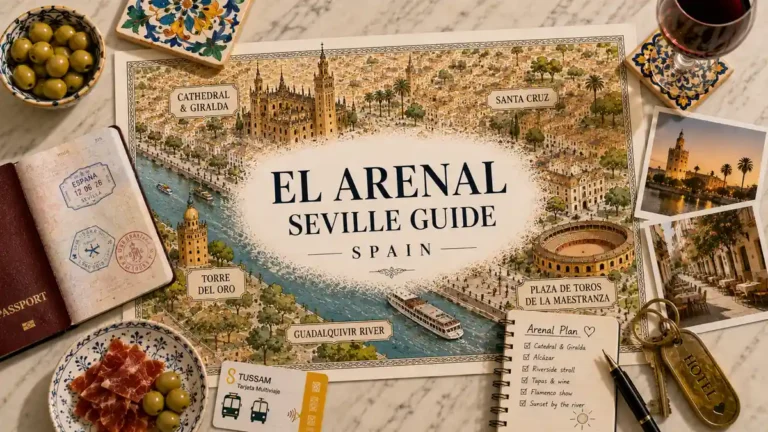
- A relaxed stretch of the Guadalquivir riverside and Torre del Oro.
- The Museo de Bellas Artes for a quieter, indoor highlight.
Option B: A Day Trip from Seville (Córdoba and Beyond)
A Day 3 day trip pairs Seville with a second Andalusian city for the day. Córdoba is the classic choice, reachable in roughly 45 minutes by high-speed rail, which leaves a full day on the ground. Keep the plan simple:
- Córdoba is the most cited option for its compact, walkable old town.
- Smaller towns such as Carmona work as lighter, shorter alternatives.
- Book rail seats in advance and return in time for a final Seville evening.
Train and bus tickets
Compare routes, schedules and prices across rail and bus operators in one search, with mobile tickets on your phone.
New to Omio? Code NEW10 takes 10% off your first booking — or APPNEW10 if you book inside the Omio app. Both apply to bookings up to €80.
Search routes and compare prices on Omio →
Tripstou may earn a commission if you book through this link, at no extra cost to you.
How to Pace Three Days Around Seville’s Heat
Keep outdoor stops to morning and evening, and indoor stops at midday. Seville’s midday sun is intense, especially across three full days, so the plan front-loads open-air spots like Plaza de España into the morning and saves shaded or indoor sights for the hottest hours. Pacing this way protects your energy.
The practical version of this is simple. See exposed landmarks early, retreat to interiors, shaded quarters, or a long lunch in the early afternoon, then return outdoors as the day cools. Barrio Santa Cruz, museums, and indoor monuments make natural midday refuges, while the riverside and plazas are best in the softer light of morning or late afternoon. Seasons matter too: high summer demands the strictest pacing, and the spring festival weeks bring large crowds, so adjust your timing accordingly without expecting fixed conditions.
This heat logic shapes the whole three-day sequence, not any single day. For broader practical advice on dealing with the climate and other on-the-ground details, see the dedicated Seville travel tips. The trade-off of strict heat pacing is less flexibility in your daily timing, but in summer it is the difference between an enjoyable trip and an exhausting one.
Why You Should Book the Alcázar and Cathedral Ahead
Book the Alcázar and Cathedral ahead to skip the longest queues. Reserving both in advance is the single biggest time-saver across three days, because walk-up lines for these two monuments can swallow a morning. A timed reservation lets you start Day 1 on schedule and keeps the rest of the day’s sequence intact.
The reasoning is about protecting your itinerary, not chasing a discount. Both sights are the busiest in the city and anchor your first morning, so any time lost queuing there cascades into the rest of the day. Booking ahead converts an unpredictable wait into a fixed slot, which is exactly what a tightly sequenced plan needs. Treat the principle as the rule and the specifics as variable: opening hours, prices, and the exact booking process can change, so confirm them through official channels when you reserve.
Advance booking matters most for these two monuments; flamenco shows and popular restaurants also reward reserving ahead, but the Alcázar and Cathedral are the priority. Costs for tickets and tours fold into the wider trip budget, which the Seville trip cost guide covers in full. The only trade-off is committing to a time in advance, which is a small price for not losing a morning to a queue.
Frequently Asked Questions
Is three days enough to see Seville?
Yes, three days is enough to see Seville comfortably. The headline monuments and neighborhoods sit close together in the walkable old center, so two days cover the essentials without rushing. The third day then adds depth or a day trip, making three days a relaxed, not packed visit for most first-time travelers.
What is the best day trip from Seville in three days?
Córdoba is the best day trip from Seville for a three-day visit. It sits roughly 45 minutes away by high-speed rail, leaving a full day to explore its compact, walkable old town and return for a final Seville evening. Smaller towns such as Carmona work as lighter, shorter alternatives.
Do you need to book the Real Alcázar in advance?
Booking the Real Alcázar in advance is strongly recommended. It is one of Seville’s busiest monuments, and walk-up queues can consume a large part of your morning. A timed reservation lets you start Day 1 on schedule and keeps the rest of the day’s walking sequence intact. Confirm current rules officially.
How should you spend the third day in Seville?
Spend the third day either going deeper in Seville or taking a single day trip. A slower city day suits travelers who prefer to know one place well, covering Triana, the riverside, markets, and a museum. A day trip suits those wanting a second Andalusian highlight, with Córdoba the classic option.
Can you see Seville on foot over three days?
Yes, you can see most of Seville on foot over three days. The old center is compact, so the Cathedral, Alcázar, Santa Cruz, Plaza de España, the Setas, and Triana all sit within comfortable walking distance. Transport is mainly useful for arrival, departure, and any Day 3 day trip beyond the city.
When is the best time of year to visit Seville for three days?
Spring and autumn are generally the best times for three days in Seville, offering milder weather for walking-heavy days. High summer brings intense midday heat that demands strict pacing, while spring festival weeks draw large crowds. Whenever you go, plan open-air stops for morning and evening and shaded ones for midday.
Related Guides
Use these guides to plan the parts of your trip this itinerary routes out to:
- Seville guide — the full city overview behind this route.
- 2 days in Seville itinerary — the same core in a shorter trip.
- where to stay in Seville — the best base to anchor your days.
- getting around Seville — walking, transit, and day-trip logistics.
- Seville trip cost — budgeting tickets, tours, and the wider trip.
- Seville travel tips — heat, timing, and first-time practicalities.
- Seville safety — staying safe across your three days.
Did this guide save you time or money? Tripstou is independent and reader-funded — if you'd like to give something back, you can support the site with a crypto contribution of any size.