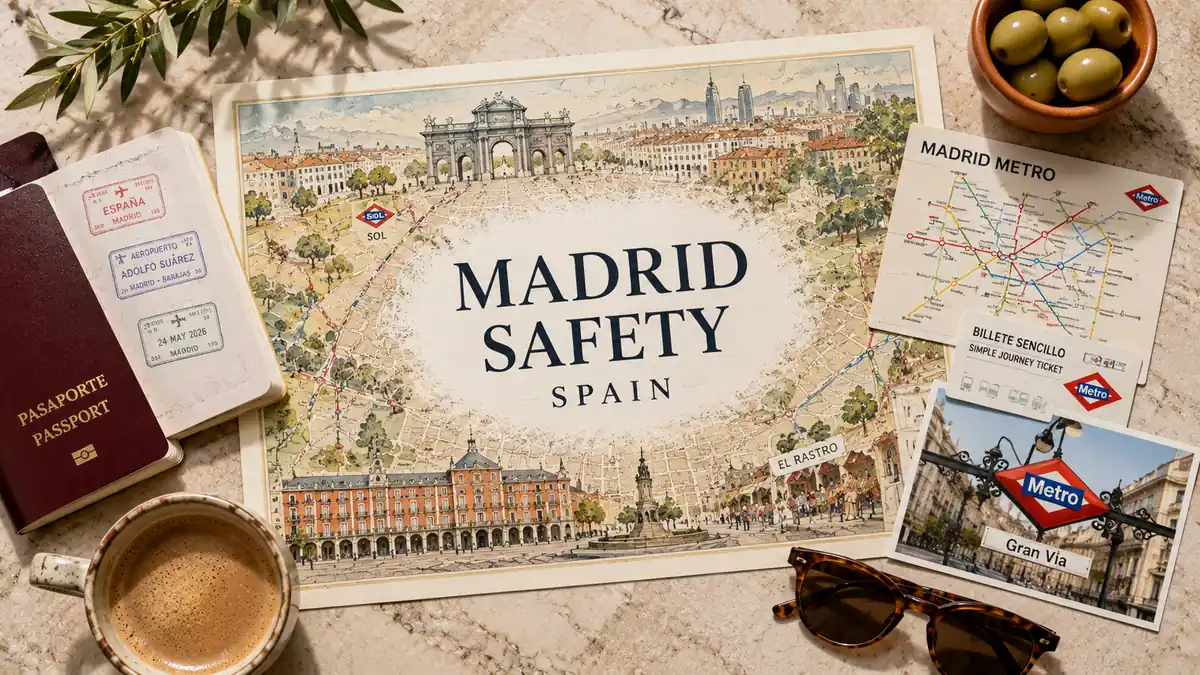
You have decided to visit Madrid, and now you want to know how careful you actually need to be. The short version is reassuring: Madrid is one of Europe’s safer big cities, and serious trouble for visitors is uncommon. The one concern worth taking seriously is petty theft, especially pickpocketing in crowded tourist spots and on busy metro lines. This guide keeps that risk in proportion and gives you organized, city-specific precautions: where and when to stay alert, how to outsmart pickpockets, whether the metro and nightlife are safe, and exactly which habits keep your trip smooth.
Quick Answer
Yes, Madrid is generally a safe city for visitors, and violent crime against tourists is rare. The real risk is pickpocketing in crowded tourist hotspots and on busy metro lines. Keep your valuables secured, stay aware in dense crowds and late at night, and you will almost certainly have a trouble-free trip.
Trust Layer
Tripstou planning guide for travelers resolving one travel decision. Covers the main variable, traveler context, and practical tradeoffs.
Produced with AI assistance and reviewed by Alex Perrut, working in tourism since 2015, for the Tripstou editorial team. See our editorial process for details.
Last factual review: June 5, 2026.
Official sources consulted: travel-europe.europa.eu, european-union.europa.eu.
Key Takeaways
- Madrid is one of Europe’s safer big cities, and violent crime against visiting tourists is genuinely rare.
- Pickpocketing is the one real risk, far outweighing any concern about violence in central Madrid.
- Stay most alert in dense crowds: Puerta del Sol, Gran Vía, Plaza Mayor, El Rastro, and the Atocha area.
- The core habit is securing valuables: bag in front, no back-pocket wallet, and awareness in crowds.
- The metro is safe to use day and night; the only watch-point is theft on packed lines and at doors.
- Madrid’s nightlife is lively and safe with normal crowd awareness and an eye on your drink and belongings.
Table of Contents
Is Madrid safe for tourists?
Yes, Madrid is generally safe for tourists, and violent crime against visitors is rare. It ranks among the more relaxed major European capitals, with a visible police presence in central districts. The main thing travelers actually deal with is petty theft, not danger to their personal safety.
That distinction matters for how you plan. Madrid does not call for the kind of caution some travelers brace for in a large unfamiliar city. Central neighborhoods stay busy and walkable into the evening, families and solo travelers move around freely, and most visitors complete their trip without any incident at all.
The right mindset is relaxed but attentive. Treat Madrid the way you would treat any popular tourist city: enjoy it openly, but keep an eye on your belongings in the places where crowds gather. For wider context on the city beyond safety, see the full Madrid travel guide.
What is the biggest safety risk in Madrid?
Pickpocketing is by far the biggest safety risk in Madrid for visitors. It heavily outweighs any concern about violent crime, which rarely touches tourists. Thieves target distracted travelers in crowds, working quickly and quietly rather than confrontationally, so the threat is to your wallet and phone, not to you.
Understanding this hierarchy changes how you protect yourself. Because the dominant risk is theft by stealth, your defenses are about awareness and securing valuables, not about avoiding “dangerous” areas. Pickpockets favor distraction, density, and bottlenecks: packed plazas, transport doors, busy markets, and any moment your attention is on a map or a photo.
These thefts are opportunistic, which is good news. They depend on an easy target, so a traveler who keeps valuables zipped away and stays alert in crowds is far less likely to be chosen. The next sections cover exactly where these moments cluster and the habits that close the opportunity.
Where and when to stay alert in Madrid
Stay most alert in Madrid’s busiest tourist hotspots and on crowded transport, where pickpocketing concentrates. The classic high-traffic spots are Puerta del Sol, Gran Vía, Plaza Mayor, the El Rastro flea market, and the area around Atocha station. Crowd density, not the neighborhood itself, is what raises the risk.
The pattern is about crowds and timing rather than “bad areas.” Madrid does not have tourist zones you need to avoid; instead, theft rises wherever people pack together and attention drops. The places and moments worth extra awareness include:
- Puerta del Sol and Gran Vía at their busiest, especially around events and crowds
- Plaza Mayor and the surrounding tourist streets during peak sightseeing hours
- The El Rastro Sunday flea market, where dense, slow-moving crowds are ideal for thieves
- The Atocha station area and other transport hubs during rush periods
- Crowded metro lines and platforms, particularly when boarding and exiting
- Late at night in deserted side streets, where common-sense caution applies anywhere
Your choice of base affects how often you pass through these pressure points, though every central neighborhood is well within easy reach of the sights. For help picking the right area to book, see our guide on where to stay in Madrid.
Hotels and places to stay
Compare hotels, apartments and stays for your dates in one search.
Search hotels and stays on hotels.com →
Tripstou may earn a commission if you book through this link, at no extra cost to you.
How to avoid pickpockets in Madrid
The single most important habit is keeping valuables secured and out of easy reach. Carry your bag in front of you in crowds, never keep a wallet or phone in a back pocket, and stay aware whenever you are pressed together with other people. These few habits stop the large majority of attempts.
Pickpockets rely on the easy target, so a handful of small precautions make you a poor candidate. Build these into your routine:
- Wear bags across your body and keep zips closed and facing forward in crowds
- Keep your phone and wallet in front pockets or an inside pocket, never a back pocket
- Carry only the cash and one card you need that day; leave the rest secured at your accommodation
- Stay alert during distractions: someone bumping you, a “spilled” drink, a petition or map pushed at you
- Guard phones and bags on cafe and restaurant tables, especially terraces facing the street
- Hold your bag closer the moment you step into a crowd or a metro car
These same instincts cover the wider catalogue of distraction scams that target travelers across Spain. For the full playbook of common tricks and how to shut them down, see our Spain safety guide. For broader first-time practical advice on getting the most out of the city, our Madrid travel tips pair well with these precautions.
Is the Madrid metro and public transport safe?
Yes, the Madrid metro and public transport are safe to use, day and night. The system is clean, efficient, and well used by locals and visitors alike. The only real concern is pickpocketing on crowded lines and platforms, plus the ordinary common sense of staying aware on quiet late-night services.
Theft on transport follows the same crowd logic as the rest of the city. Keep your bag in front and a hand near your valuables when boarding, exiting, and standing in packed carriages, since the press of bodies at the doors is a classic moment. Late at night, sitting in a populated carriage near other passengers is the simple, sensible move.
This guidance is about transport safety, not how to get around. For routes, tickets, and the practicalities of using the network, see our dedicated Madrid transport guide.
Is Madrid safe at night and for nightlife?
Yes, Madrid is safe at night and famous for lively, social nightlife. Central districts stay busy late, and going out is a normal, comfortable part of the Madrid experience. The main precautions are simple crowd awareness and keeping an eye on your drink and belongings in the busiest bars and clubs.
The nightlife heartlands, Malasaña, Chueca, and La Latina, are animated and well populated well into the early hours, which itself adds a layer of safety. Apply the same theft awareness you use by day, since crowded venues and packed terraces are prime spots for opportunistic pickpocketing. Keep your drink in sight, stay with your group when areas get rowdy, and stick to busier, well-lit streets when walking home.
Solo travelers can enjoy Madrid’s nightlife with normal big-city judgment, and the city is widely considered welcoming for going out alone. For deeper solo-travel nuance and national context, including the EU-wide 112 emergency number, see our Spain safety guide.
Frequently Asked Questions
Is it safe to walk in Madrid at night?
Yes, walking in Madrid at night is generally safe, especially in central and nightlife districts that stay busy late. The main precaution is ordinary common sense: favor well-lit, populated streets and stay aware in quiet, deserted side streets. Keep your valuables secured, as crowded late-night spots still attract opportunistic pickpockets.
What areas of Madrid should tourists be careful in?
Tourists should be most careful in Madrid’s crowded hotspots, not any specific “dangerous” neighborhood. Stay alert around Puerta del Sol, Gran Vía, Plaza Mayor, the El Rastro flea market, and Atocha station, where dense crowds invite pickpockets. The risk comes from crowd density and distraction, not from the area itself.
Is Madrid safe for solo female travelers?
Madrid is widely considered welcoming and safe for solo female travelers, with busy central districts and an active street life late into the evening. Apply standard big-city judgment: stay aware in crowds, guard your drink when out, and choose populated routes at night. For deeper solo-travel nuance, see our Spain safety guide.
What is the emergency number in Madrid?
The emergency number in Madrid is 112, the free EU-wide line that reaches police, ambulance, and fire services. It works across Spain and the rest of the European Union, and operators can typically assist in English. Save it before your trip so help is one call away if you ever need it.
Are taxis and rideshares safe in Madrid?
Yes, taxis and licensed rideshares are a safe, reliable way to get around Madrid, including late at night. Use official white taxis with the diagonal red stripe or a recognized app so the fare and driver are tracked. As anywhere, keep your belongings with you and stay aware when getting in and out.
Is Madrid safe for families with children?
Yes, Madrid is a comfortable and family-friendly city, with walkable central districts, plentiful parks, and a relaxed daytime atmosphere. The same pickpocketing awareness applies: keep bags secured in crowds and at busy attractions. Beyond petty theft, families rarely encounter safety problems, making Madrid an easy choice for traveling with kids.
Related Guides
Keep planning your trip with these next steps from our Madrid cluster:
- Madrid travel guide — the complete overview and starting point for planning your visit.
- Madrid in 2 days — a focused route for a short city break.
- Madrid in 3 days — a fuller itinerary with more time to explore.
- Madrid trip cost — what to budget for your stay.
- Madrid transport guide — getting around the city by metro, bus, and on foot.
- Spain safety guide — national context, common scams, and solo-travel advice.
Did this guide save you time or money? Tripstou is independent and reader-funded — if you'd like to give something back, you can support the site with a crypto contribution of any size.