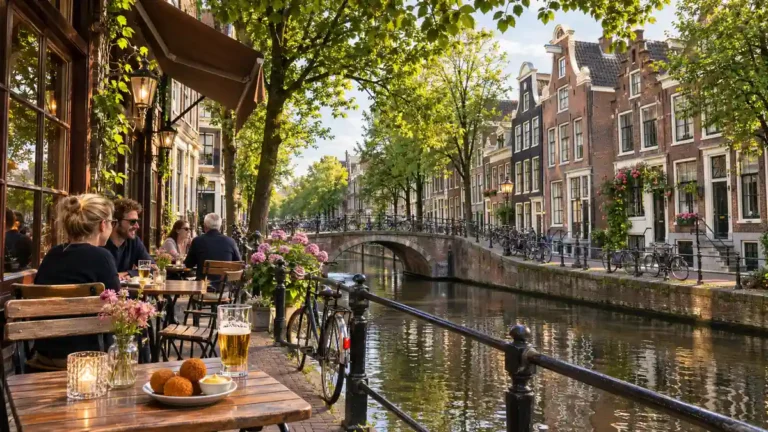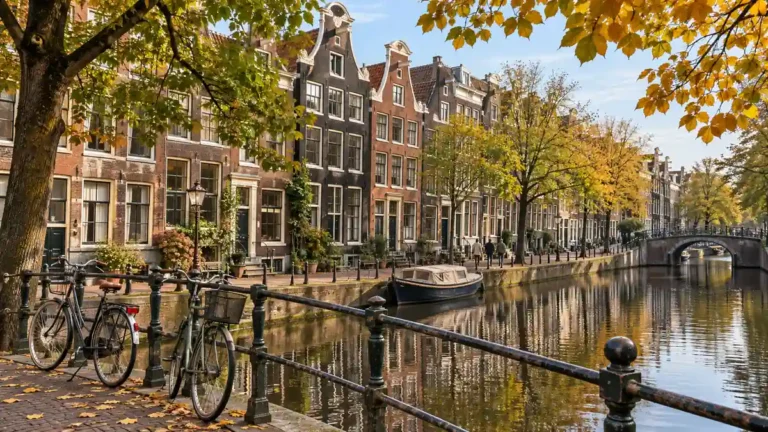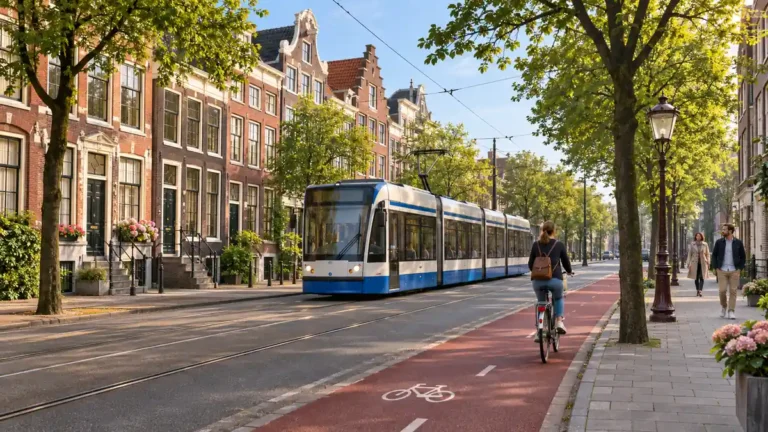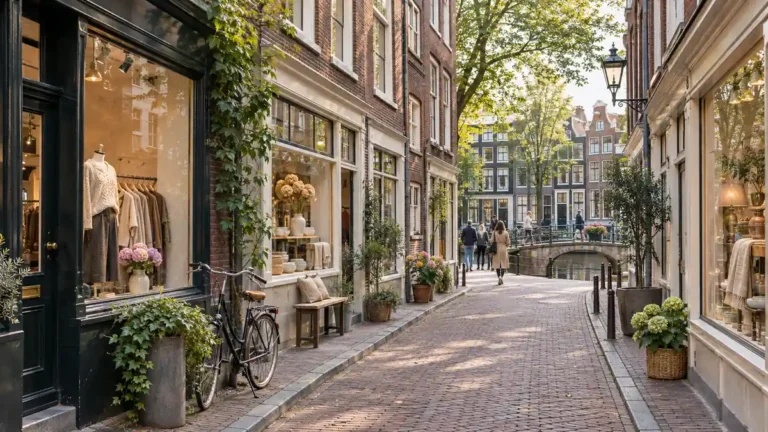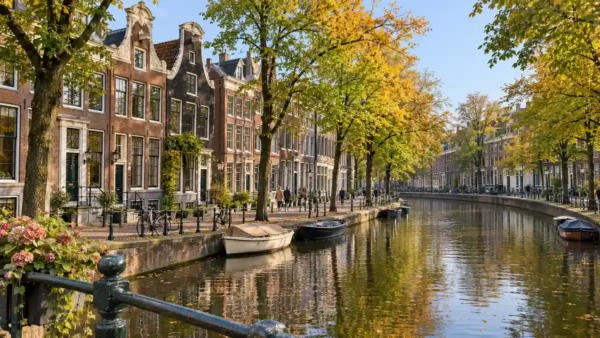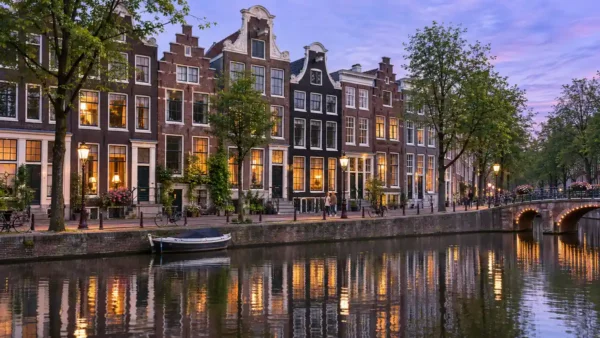
The things to do in Amsterdam that a first visit should be built around are a canal cruise on the Canal Ring, the Museumplein museums and the Anne Frank House, a walk through the Jordaan and the Nine Streets, and an hour in Vondelpark. How far you go beyond that core depends on time. One or two days hold the core and little else. A third day, or a return visit, is when the free ferry to Noord, the markets and the quieter corners earn their place. Dutch and repeat visitors who know the centre should start the other way round, at NDSM Wharf and Westergas.
The picks below are grouped by kind of experience, not ranked: canals, neighbourhoods, markets, the water and Noord, free and hidden corners, museums, and the paid attractions that save a rainy day. A few names need a plain-terms gloss. The Canal Ring is the belt of concentric canals around the old centre. The Jordaan is the former working-class district on its western edge. Noord is the north bank across the IJ, the wide waterway behind the central station.
The big three museums get a short section here and a full page of their own. Nothing on this page depends on a price or an opening hour, so the choices hold whatever season you travel in.
The Short List
- A first visit is best built around a canal cruise, the Museumplein museums with the Anne Frank House, and a walk through the Jordaan and the Nine Streets.
- Book the Anne Frank House the moment your dates are fixed, because its tickets are sold only online and never at the door.
- If you walk only one neighbourhood, make it the Jordaan in the morning, when its hofjes and brown cafés are still quiet.
- The free passenger ferry from behind Amsterdam Centraal to NDSM Wharf is the easiest change of scene in the city, and it costs nothing.
- On a wet day with children, NEMO Science Museum is the strongest indoor pick, and it works as a museum for adults too.
- A second visit gets more from Noord, Westergas and the attic church of Ons’ Lieve Heer op Solder than from another round of the Museumplein.
What first-timers should not miss in Amsterdam
A first visit of one to three days should not miss a canal cruise, the Museumplein museums with the Anne Frank House, a walk through the Jordaan and the Nine Streets, and Vondelpark. Each is on the list for a different reason, and together they cover what makes Amsterdam unlike any other European capital.
- A canal cruise. The city was built to be seen from the water, and an hour on a boat explains its layout better than a map does.
- The Rijksmuseum, the Van Gogh Museum and the Anne Frank House. These are what most people fly in for, and the reason a first trip needs booked time slots.
- The Jordaan and the Nine Streets. The canal belt is best understood on foot, and these two areas are where it is most rewarding to wander.
- Vondelpark. The city’s breathing space, best crossed by bike or walked between museum visits on the Museumplein side.
Dam Square, the Royal Palace on its western side and the Begijnhof are the centre’s quick wins. The square is a stop on the way between other sights. The Begijnhof, a hidden courtyard of old houses behind a plain doorway off the Spui, is the calmest spot in the busiest part of town.
The real tradeoff on a short trip is ticketed museum time against free walking time. Every booked slot on the Museumplein fixes your day around it, while the Jordaan and the canals ask nothing of your schedule. A two-day visitor who books all three big museums has spent most of the daylight indoors.
The core is not for everyone. A repeat visitor, or anyone who hates queues and timed entries, gets more from skipping the Museumplein and taking the ferry to Noord instead.
Is a canal cruise worth it, and which kind should you take?
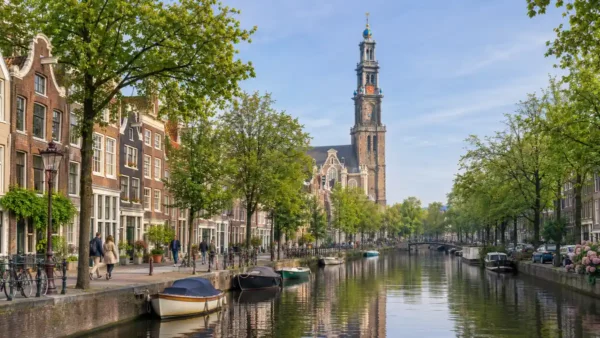
A canal cruise is worth it on a first visit, because the 17th-century Canal Ring, a UNESCO World Heritage Site, only reads as a whole from the water. The one traveler who can skip it is the repeat visitor who has already done it in daylight.
The choice is mostly about the boat, and four kinds cover nearly every departure from the centre:
- Open boat or small electric boat. Low to the water, smaller groups, often with drinks on board. Couples and groups of friends get the most from it; it is less comfortable in cold or wet weather.
- Classic saloon boat. A restored historic vessel with a covered cabin, usually with food or wine served. It works in any weather and suits a slower, more social evening.
- Audio-guide circuit cruise. The large glass-roofed boats that loop the main canals with recorded commentary. First-timers who want the history narrated, and families with small children, are well served here.
- Evening cruise. Any of the above after dark, when the bridges are lit. It trades the narration and detail of a daytime loop for atmosphere.
Narrated or quiet is the second decision. The glass-roofed circuit boats give you context but little sense of the water; the small open boats give you the water and leave the history to your own reading. For a first cruise with an open-boat feel, you can book an electric boat and take the drinks with you.
Pair the cruise with the Jordaan walk on the same day. Seeing the Prinsengracht and Herengracht from the water first makes the streets beside them make sense an hour later.
Tours and activities
Book skip-the-line tickets, day trips and local tours with free cancellation on most activities.
You can also browse everything on getyourguide.com.
Tripstou may earn a commission if you book through this link, at no extra cost to you.
The neighbourhoods worth walking: Jordaan, the Nine Streets and De Pijp
The Jordaan is the walk to take if you take only one: narrow canals, almshouse courtyards and brown cafés packed into a few blocks west of the main canal belt. The Nine Streets are its shopping edge, and De Pijp, south of the centre, is where the city eats and shops at street level.
De Wallen, the Red Light District, is the historic quarter around the Oude Kerk; it is walkable by day and holds two of the city’s best small sights, covered under hidden gems below. If you are choosing which Amsterdam neighbourhood to base in among these areas, our guide to where to stay in Amsterdam compares them as places to sleep.
Jordaan
The Jordaan rewards a slow morning more than any other part of Amsterdam. Its hofjes, almshouse courtyards built around a garden and hidden behind street doors, are the district’s signature: quiet, residential, and open to respectful visitors at many addresses. Between them sit brown cafés, the old wood-panelled pubs named for their smoke-darkened walls, and the Noordermarkt square around the Noorderkerk. Anyone can enjoy it; mornings are best, before the cafés fill.
De 9 Straatjes (the Nine Streets)
The Nine Streets are short cross-streets linking the main canals beside the Jordaan, lined with independent shops, vintage stores and small cafés. This is the stretch for shoppers and photographers, since every street ends on a canal view. They are crowded by mid-afternoon, so walk them in the morning or early evening.
De Pijp
De Pijp is the second-day wander: a denser, younger district with the Albert Cuypmarkt as its spine. The side streets hold cafés and small restaurants, and Sarphatipark is a short walk east for a break. The market itself is covered in the next section.
The neighbourhoods matter more than the monuments in Amsterdam. Dam Square is seen in passing; the Jordaan holds a whole morning without a single ticket.
Which Amsterdam markets are worth your time
The Albert Cuypmarkt is the market for an everyday street market, the Noordermarkt on a Saturday is the one for organic and farmers’ produce in the Jordaan, and the Bloemenmarkt is a quick stop on the way past. The first two are where locals actually shop; the flower market is mainly a sight.
- Albert Cuypmarkt (De Pijp). A long street market of food, fabrics and household goods, closed on Sunday; the best place to graze on street snacks.
- Noordermarkt (Jordaan). The Saturday organic market on the square by the Noorderkerk, for picnic shopping and a local crowd.
- Bloemenmarkt (Singel). The floating flower market along the canal, worth a browse for bulbs and the photo, not a detour.
- Foodhallen (Oud-West). An indoor food hall in a converted tram depot, the market to choose on a rainy day or for dinner.
- IJ-Hallen (NDSM Wharf). A monthly flea market in the old shipyard halls in Noord, best combined with the ferry crossing.
The Bloemenmarkt and the Noordermarkt sit at opposite ends of the same choice. One is built for visitors passing through the centre; the other is built for people who live in the Jordaan, and feels like it. If you only have time for one market, the Noordermarkt on a Saturday morning gives you the Jordaan walk and the market in a single outing.
Foodhallen solves a different problem. It is indoors, open into the evening and close to Vondelpark, so it turns a wet afternoon or a late dinner into something to do.
Cross the IJ: Noord by free ferry
The free passenger ferries from behind Amsterdam Centraal are the easiest change of scene in the city. NDSM Wharf is the reason to go; the Eye Filmmuseum and the A’DAM Lookout are the reasons to stop on the near bank.
Two crossings matter for visitors, and both are free for foot passengers and cyclists. The short hop to Buiksloterweg lands you beside the Eye Filmmuseum, the white, angular film museum on the waterfront, and the A’DAM Toren, the tower with the A’DAM Lookout on top and its rooftop swing hanging out over the edge. The longer crossing runs west along the IJ to NDSM Wharf, a former shipyard turned creative district.
NDSM is the stronger half-day. Its hangars and quays are covered in street art, STRAAT holds a museum of street and graffiti art in one of the old shipyard halls, and the IJ-Hallen flea market fills the same halls once a month. Nieuwendammerdijk, a historic dike street of wooden houses east of the Buiksloterweg landing, is the quiet counterpoint: a walk or a bike ride that feels like a village a few minutes from the station.
Noord suits a second day, a repeat visit or Dutch travelers who already know the centre. The ferry itself is half the experience: a free crossing of a working harbour, with the station’s façade behind you and the shipyards ahead. Few paid activities in the city deliver that much change of scenery for the effort.
Hidden gems and free things to do when the big names are booked out
Amsterdam’s best free hours are spent on foot and on water you do not pay for: the hofjes, Vondelpark, the Begijnhof, the ferry crossing and the NEMO roof. Its best quiet corners are the small museums and streets that list pages skip, and they are the answer when the Museumplein slots are gone.
The free picks, several of them already met above:
- Vondelpark, for a walk or a bike loop between the Museumplein and Oud-West.
- Westerpark and Westergas, the park and former gasworks turned venues, cafés and weekend events west of the Jordaan.
- The Begijnhof and the Jordaan hofjes, for courtyard calm in the middle of the city.
- Dam Square and the outside of the Royal Palace.
- The NEMO roof, the sloping terrace on top of the green science museum, with views over the old harbour.
- The free ferry and NDSM Wharf, covered above.
- Browsing the Bloemenmarkt on the Singel.
- Flevopark in Oost, a wilder, local park far from the tour groups.
The quieter corners, most of them small and paid, reward a second visit:
- Museum Ons’ Lieve Heer op Solder. A hidden church in the attic of a canal house in De Wallen, built when Catholics worshipped out of sight.
- Oude Kerk. The great medieval church at the heart of De Wallen, now also used for contemporary art.
- Houseboat Museum. A real houseboat on the Prinsengracht you can step inside.
- City Archives in De Bazel. The monumental De Bazel building on Vijzelstraat, with exhibitions drawn from the city’s records.
- LAB111. An arthouse cinema with a bar and restaurant in a former laboratory building in Oud-West.
- Hortus Botanicus. The historic botanical garden in the Plantage district, with glasshouses for a cold day.
- Brouwerij ‘t IJ. The local brewery beside the De Gooyer windmill in Oost, the city’s most photographed place to drink a Dutch beer.
De Wallen is where the hidden-gem layer and the obvious one overlap. Most visitors walk straight past Ons’ Lieve Heer op Solder on their way through the Red Light District, and it is the best small museum in the centre.
Amsterdam’s museums: the names to know and why to book ahead
The Rijksmuseum, the Van Gogh Museum and the Anne Frank House are the three a first visit plans around, and all three reward booking before you travel. The full list, and how the ticketing works at each, is covered in our Amsterdam museums guide.
The Van Gogh Museum holds the largest collection of the painter’s work anywhere, traced from his early Dutch canvases to his last months in France. Entry runs on timed slots, so booking a set time before you travel is what keeps the visit from depending on the queue on the day.
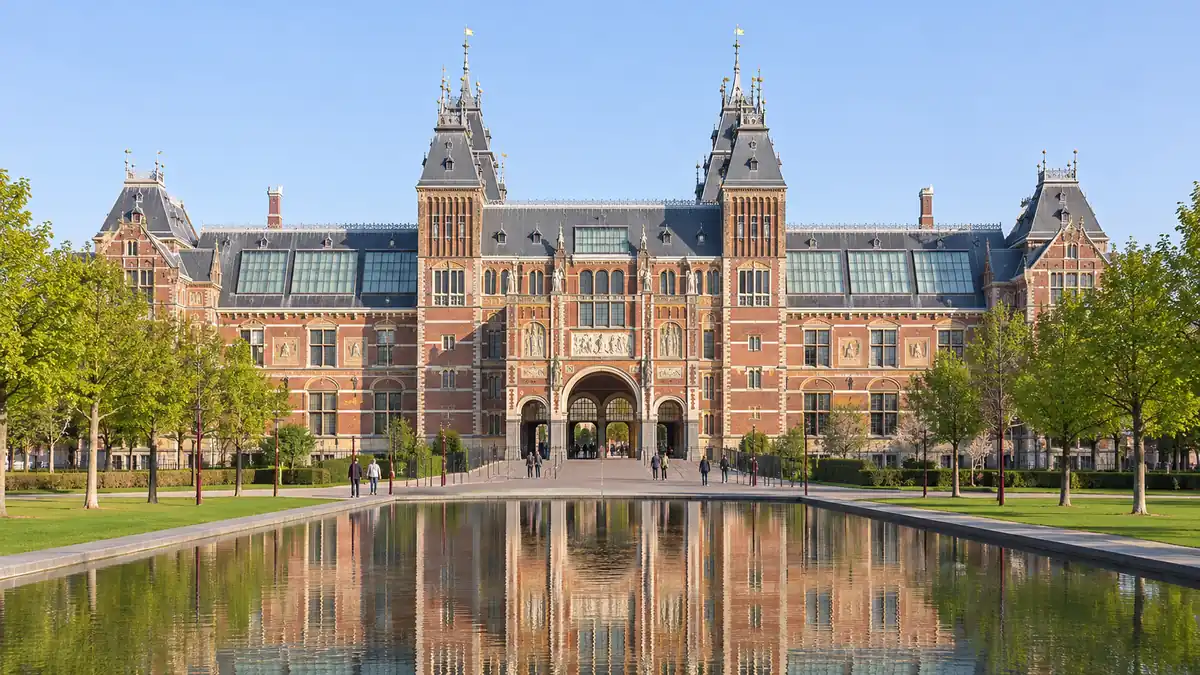
The Rijksmuseum is the national museum of Dutch art and history, home of Rembrandt’s The Night Watch and the Vermeers. It sits across the Museumplein from the Van Gogh, which makes the pair one stop. For a fixed slot that anchors the rest of your day, reserve a Rijksmuseum entry once your dates are set.
Beyond the big three, the Stedelijk Museum covers modern and contemporary art next door on the Museumplein, NEMO is the science museum for families, and the Rembrandt House is the painter’s home and studio. Guided walking tours that trace Anne Frank’s story and the city’s Jewish history are a different format, useful when the house itself is sold out.
Do you need to book the Anne Frank House in advance?
Yes, you need to book the Anne Frank House in advance. Tickets are sold only online, not at the door, and they are released in weekly batches, so book as soon as your travel dates are fixed. A visitor who leaves it until arrival should plan on the walking-tour alternative instead.
Rainy days and kids: the paid attractions that earn their ticket
NEMO Science Museum and ARTIS Royal Zoo are the family picks, while the Heineken Experience, the Amsterdam Dungeon and Madame Tussauds are the indoor rainy-day options. A saloon-boat cruise and the Foodhallen are the wet-weather fallbacks that are not attractions at all.
- NEMO Science Museum. Hands-on science in the green ship-shaped building by the old harbour; the strongest indoor choice for school-age children.
- ARTIS Royal Zoo. The city zoo in the Plantage, with an aquarium and planetarium, for families with younger children; much of it is outdoors.
- Heineken Experience. The interactive brand experience in the former brewery near De Pijp, for adults who want a fun hour with a drink at the end.
- Amsterdam Dungeon. Live actors and dark rooms retelling the city’s grim history; teenagers love it, small children find it frightening.
- Madame Tussauds. The wax museum on Dam Square, the easy indoor stop for families already in the centre.
ARTIS is the family pick that needs a dry day. Its animal houses, aquarium and planetarium carry a damp morning, but the outdoor enclosures do not, so it fits a mixed-weather day better than a downpour. For a dry-day plan, you can book zoo tickets ahead and walk on to the Hortus Botanicus, a few streets away in the same district.
The Heineken Experience is a brand show, not a craft-beer visit. Travelers who want to drink where the beer is actually brewed should head to Brouwerij ‘t IJ instead. On a fully wet day, the big museums from the previous section remain the best use of indoor time, and NEMO doubles as a museum for adults.
What to book ahead, and how to fit it into a short trip
Book the Anne Frank House first, the Van Gogh Museum and the Rijksmuseum next, and a canal cruise only in high season or for an evening departure. Everything else on this page can be walked into on the day.
| Experience | Book ahead or walk in | Why |
|---|---|---|
| Anne Frank House | Book as soon as dates are fixed | Online only, no door sales |
| Van Gogh Museum | Book before you travel | Timed entry slots |
| Rijksmuseum | Book before you travel | A set slot anchors the Museumplein day |
| Canal cruise | Book in high season or for evenings | Popular departures fill; daytime loops usually have space |
| Ferry to Noord and NDSM | Walk in | Free for passengers, no ticket |
| Neighbourhoods, markets, parks | Walk in | Free and unticketed |
The booking order matters more than the number of bookings. Lock the Anne Frank House slot first and build the Museumplein day around it; the free half of the page then fills the gaps without any planning. Laying the core out over two days is what a two-day Amsterdam itinerary does, day by day.
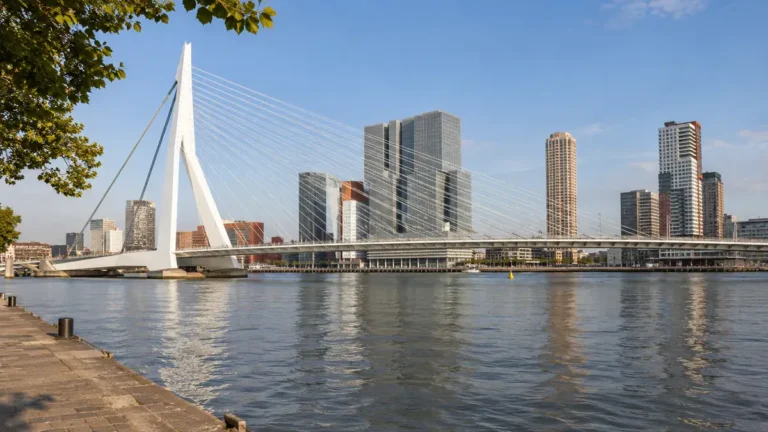
A third day opens the countryside. Zaanse Schans for its windmills, the old fishing towns of Volendam, Edam and Marken, the canal village of Giethoorn, Keukenhof in spring, Haarlem, and the Rotterdam, Delft and The Hague circuit are the trips most visitors weigh. Our guide to day trips from Amsterdam compares them.
Arrival from the airport, daily costs and the best months to go sit in our Amsterdam travel guide.
How This Selection Was Checked
This page picks the sights, neighbourhoods, markets and experiences that deserve a first-timer’s days in Amsterdam, grouped by type; it is not a museum guide, an itinerary, a day-trip planner or a guide to where to stay, and it prints no prices or opening hours.
Alex Perrut, working in tourism since 2015, went over this selection for the Tripstou editorial team after it was written with AI assistance, checking the ticket and ferry rules against the sources below. How we work is set out in our editorial process.
Official sources consulted: Anne Frank House, I amsterdam, Holland.com.
Keep Planning Amsterdam
- Amsterdam travel guide: getting in from the airport, what a trip costs and when to go.
- The best museums in Amsterdam: the full list and how tickets work at each.
- Two days in Amsterdam: these picks laid out in a workable order.
- Where to stay in Amsterdam: which area to choose as your base.
- Day trips from Amsterdam: windmills, Giethoorn and the tulip fields.
Did this guide save you time or money? Tripstou is independent and reader-funded — if you'd like to give something back, you can support the site with a crypto contribution of any size.